RepairPal puts average US car thermostat replacement cost at $616-$716 before taxes and fees. Your vehicle, thermostat design, labor rate, and coolant service can move the bill substantially. A cheap thermostat insert does not represent the cost of a complete repair.
If your engine overheats, pull over safely, switch it off, and arrange a tow. Never open a hot radiator or expansion-tank cap. Pressurized coolant can cause severe burns.
How Much Does Thermostat Replacement Cost by Vehicle?
RepairPal's 2026 estimates assign $195-$286 to labor and $421-$429 to parts for the national average. Those figures describe its repair-estimator pricing, rather than the price of every thermostat on a retail shelf.
The vehicle-specific estimates below show why a single advertised repair price rarely tells the full story.
| Vehicle | Estimated parts | Estimated labor | Estimated installed total |
|---|---|---|---|
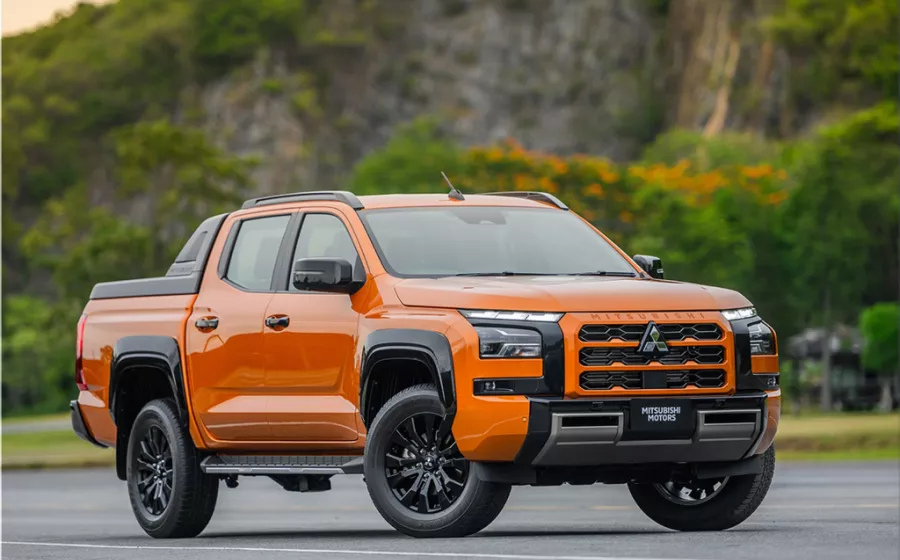
| Toyota Corolla | $128 | $193-$284 | $321-$412 |
| Toyota Camry | $154-$156 | $235-$345 | $390-$501 |
| Honda Civic | $242-$269 | $161-$236 | $403-$505 |
| Ford F-150 | $505-$511 | $146-$215 | $651-$726 |
These estimates exclude taxes, fees, location adjustments, and related repairs. RepairPal rounds some figures independently, so component totals can differ slightly from its published totals. The rows cover model-level estimates across years; they do not quote a specific engine or trim.
Pro-Tip: Request an estimate using your model year, engine, and ZIP code. A broad Corolla average, for example, does not establish the price for every Corolla generation.
Verified US Thermostat Prices: Named Retail Products
Parts prices tell a different story. AutoZone's US listings retrieved for this guide show conventional inserts below $20, while a complete mechanical housing assembly costs substantially more. Retail prices may change with location and promotions; the figures below exclude tax and delivery.
| Product and part number | Retail price | Opening temperature | Listed warranty | Design distinction |
|---|---|---|---|---|
| Duralast 15359 | $9.99 | 195°F / 90.6°C | 1 year | Conventional mechanical insert |
| Duralast Gold 15359DLG | $16.99 | 195°F / 90.6°C | 3 years | Triple-bridge construction; retailer advertises increased coolant flow |
| MotoRad Failsafe 7200-195 | $19.99 | 195°F / 90.6°C | Limited lifetime | Mechanism locks the valve open during an overheating event |
Research date: October 2, 2026. Compare these products only after checking catalog fit for your engine. Matching opening temperatures alone does not establish compatibility, and warranty terms may exclude labor.
By comparison, the Duralast 81594 thermostat housing assembly costs $114.99 and includes the thermostat, housing, and seals or gaskets. Its specified opening temperature reaches 194°F / 90°C. It serves different applications from the inserts above.
The Gold insert adds $7 over the standard Duralast; the Failsafe adds $10. Those premiums buy different construction or protection features, but neither proves a longer service life. MotoRad requires replacement after its safety mechanism locks open, and that mechanism does not repair coolant loss or a failed water pump.
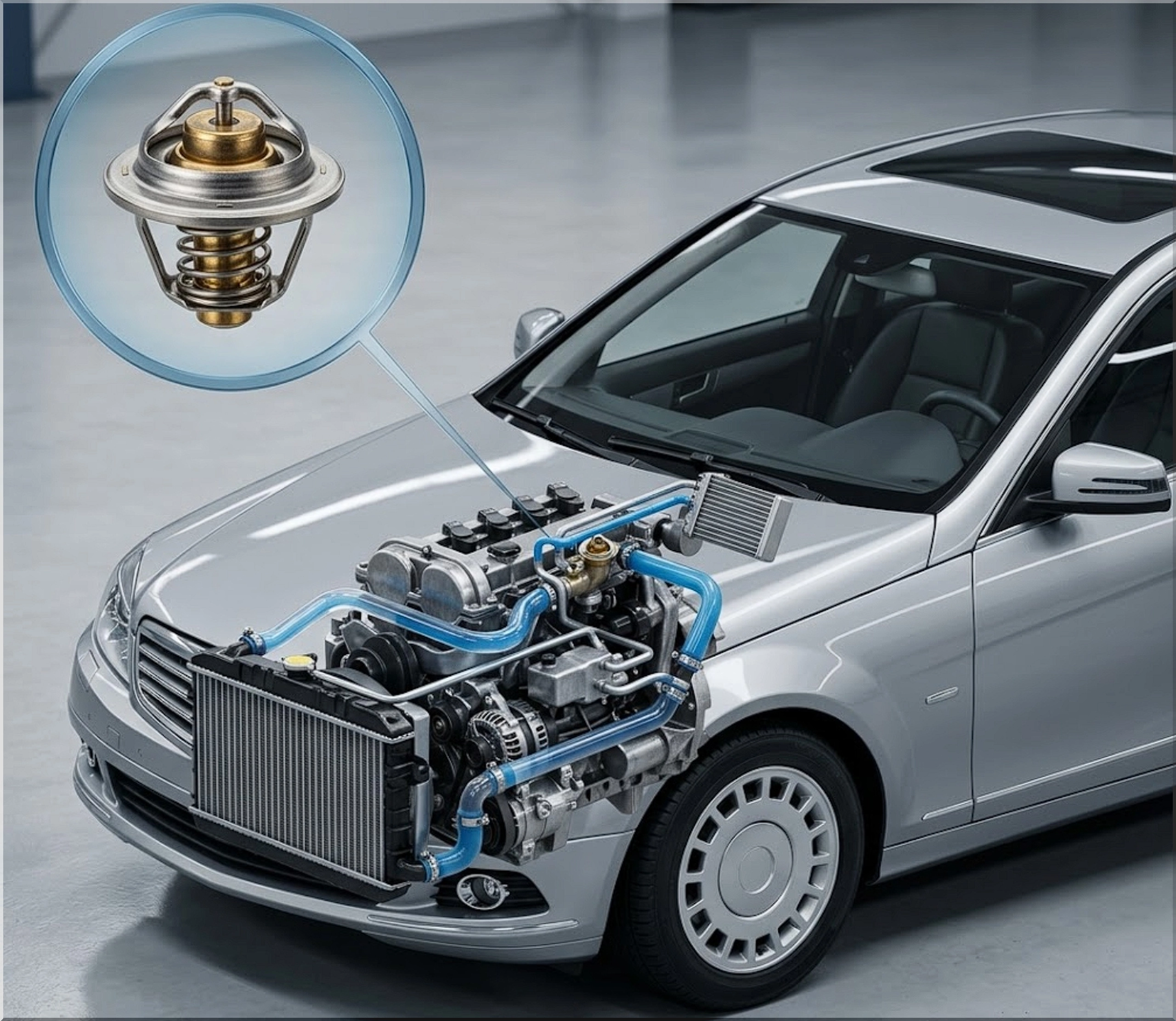
Why Thermostat Design Changes the Bill
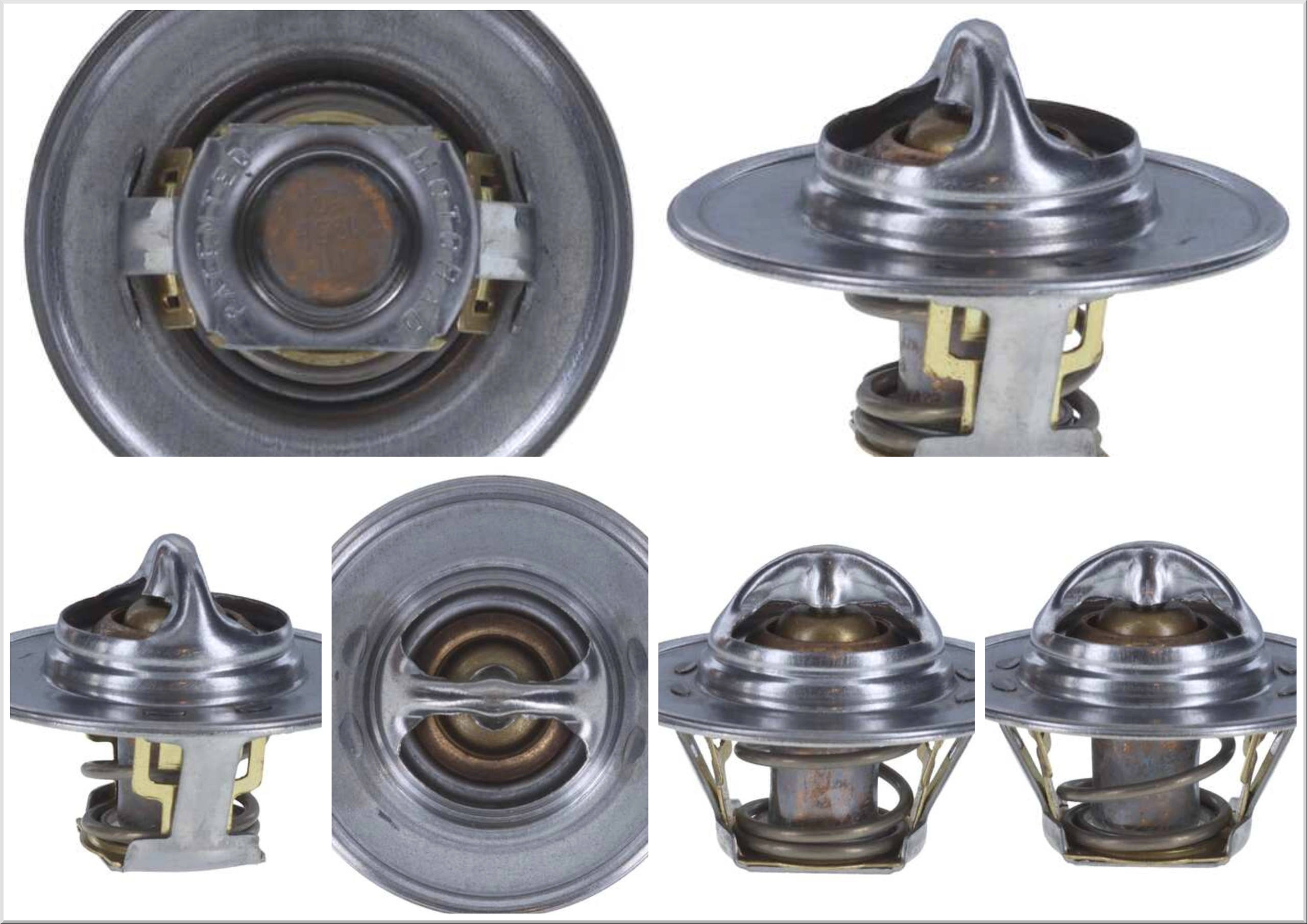
A conventional car thermostat uses a temperature-sensitive wax element. Heat expands the wax, which moves a piston and opens the valve toward the radiator. The thermostat controls flow; the water pump circulates coolant.
Specifically, MotoRad's 7200-195 has a sealing-flange diameter of 2.13 inches / 54.10 mm and a height of 1.48 inches / 37.59 mm. These dimensions illustrate why a thermostat that looks similar can still fail to fit a housing correctly.
Several design and service differences raise thermostat replacement cost:
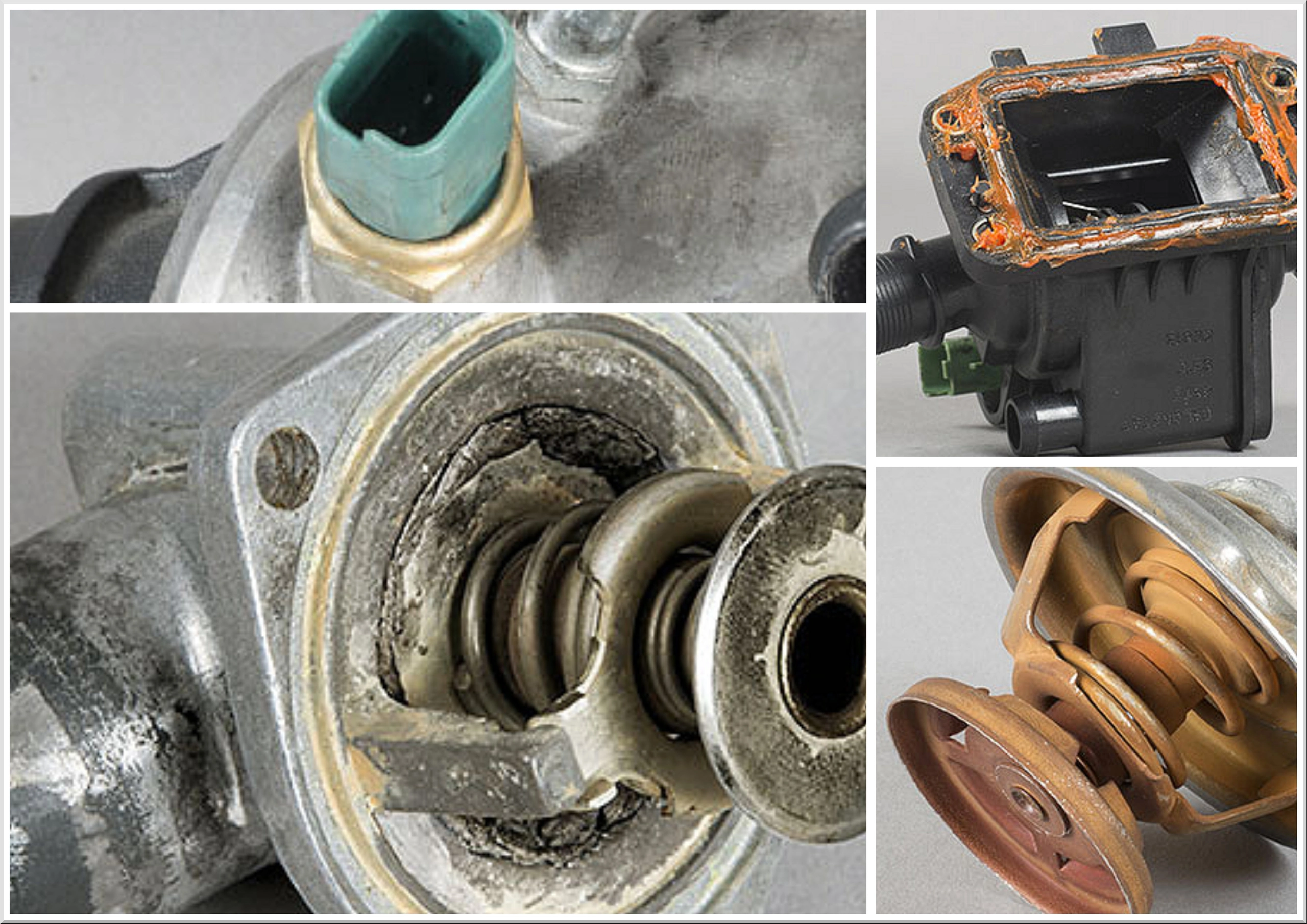
- Integrated housing: The replacement includes the valve and surrounding coolant connections. A cracked or distorted housing needs attention even when the valve still operates.
- Electronic control: A map-controlled thermostat adds an electrical heater to its wax element. Engine management commands that heater under specific load conditions, so diagnosis must also check connectors and electrical faults.
- Restricted access: Intake components, brackets, or other obstructions increase disassembly work. The shop should identify those tasks in its labor estimate.
- Coolant condition: Contamination or incompatible coolant can justify flushing. A routine thermostat replacement does not automatically require every cooling-system service.
What Should the Labor Charge Include?
Thermostat replacement labor should cover the applicable removal, installation, coolant refill, air removal, and repair verification. Ask the shop to separate diagnostic charges from replacement work. Also ask if its labor figure already includes coolant bleeding before accepting another bleeding charge.
Use the billed hours and hourly rate to check the arithmetic. For illustration, 1.5 hours at $140 per hour equals $210, while 3 hours at the same rate equals $420. These examples demonstrate the math; they do not establish your vehicle's repair time or a national labor rate.
Correct refill work earns its place on the invoice. Trapped air can interfere with circulation and temperature readings, so a low parts price does not justify skipping the manufacturer's refill procedure.
Pro-Tip: Ask for the part number alongside the parts charge. Compare an insert with an insert, or a housing assembly with a housing assembly, before challenging a price difference.
How Can You Challenge a High Quote Without Buying the Cheapest Repair?
Request two written quotes for the same repair scope. Give each shop the VIN, symptoms, diagnostic codes, and any recent cooling-system work. Then compare these items:
- Diagnosis: What test supports thermostat replacement?
- Parts: Which brand and part number will the shop install, and does the price include the housing and seals?
- Labor: How many billed hours apply, and what hourly rate does the shop charge?
- Coolant: Which vehicle specification, quantity, and refill procedure does the job require?
- Additional work: What evidence supports a flush, hose replacement, or another repair?
- Warranty: Does coverage include parts, labor, and repeat coolant service?
A shop's parts charge may exceed a public retail listing because it covers sourcing and warranty responsibility. Ask the shop to explain the difference. A $9.99 insert price, by itself, does not prove that a complete assembly quote overcharges you.
Confirm the Fault Before Paying for Replacement
A stuck-open thermostat can delay warm-up and weaken cabin heat. A stuck-closed thermostat can restrict radiator flow and cause overheating. Other cooling-system faults can produce similar symptoms, so diagnosis should precede parts purchases.
The P0128 code indicates coolant temperature below the thermostat's expected regulating temperature. It supports investigation; it does not prove the thermostat alone caused the fault. A technician should check coolant level, temperature-sensor data, warm-up behavior, and the vehicle's diagnostic procedure.
In addition, request inspection of the water pump, radiator, hoses, and housing when symptoms support it. Replacing the thermostat will not fix a leaking pump or restricted radiator.
Does DIY Thermostat Replacement Save Money?
DIY work removes the shop labor charge, but you still need the correct thermostat, fresh seals, compatible coolant, tools, and service instructions. Accessible conventional inserts offer a simpler task than assemblies behind substantial engine hardware. Assess access and refill requirements before buying parts.
Follow the vehicle's procedure: let the engine cool, collect drained coolant, clean sealing surfaces, install the thermostat in the correct orientation, and tighten fasteners to the specified torque. Use sealant only when the manufacturer calls for it. Then refill, bleed, check for leaks, and verify operating temperature.
Avoid a universal torque figure. Housing material and fastener design change the specification, and overtightening can damage the repair you just purchased.
Pro-Tip: Choose the correct fit and opening temperature before choosing a warranty or a lower price. The best value comes from a verified diagnosis, the right part, and a repair that restores stable engine temperature.
- 7 views