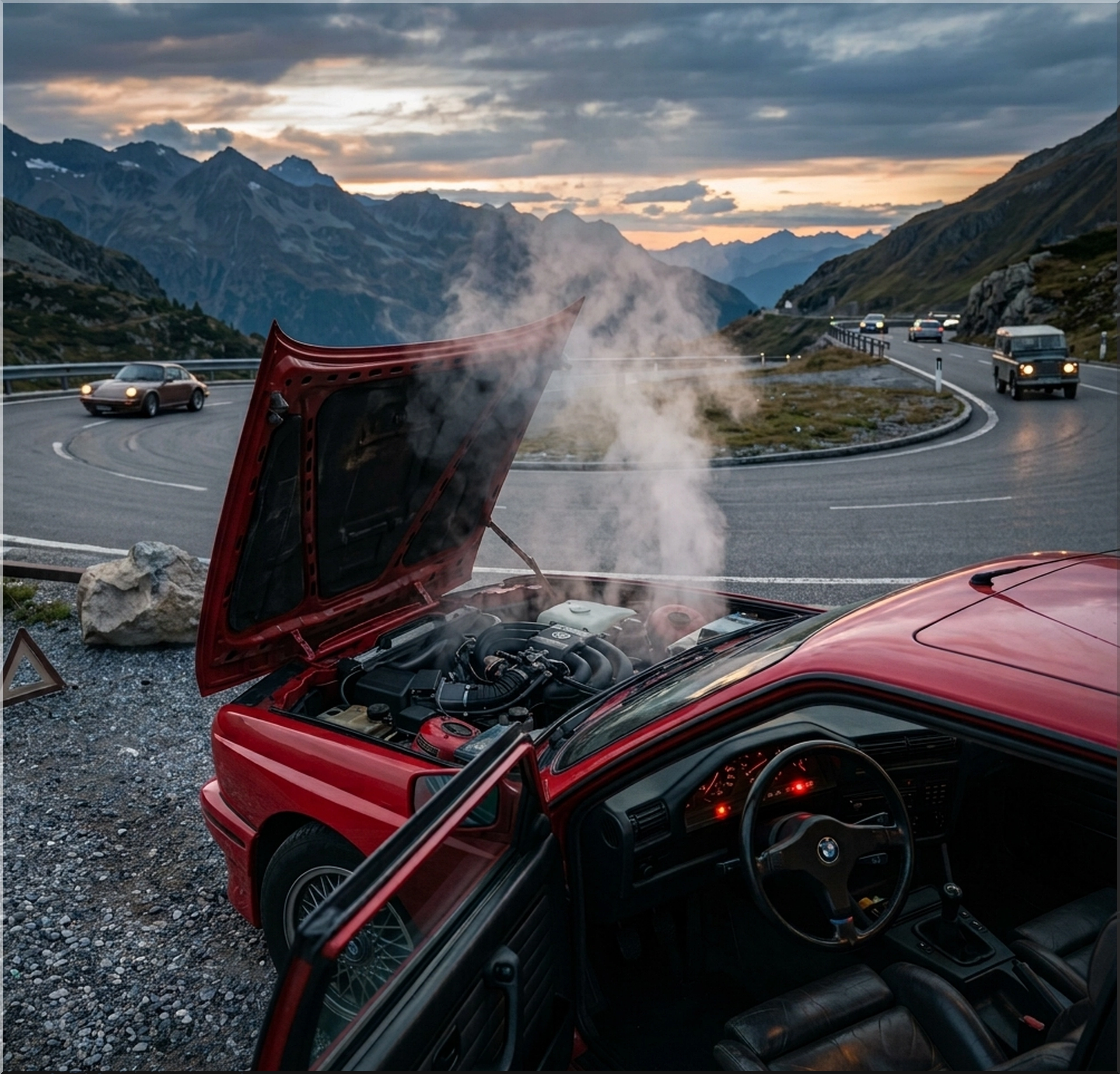
A thermostat stuck open keeps an engine too cool; a thermostat stuck closed can make it overheat within minutes. A low temperature gauge and weak cabin heat point toward an open valve. A fast-rising gauge, steam, or boiling coolant calls for an immediate stop.
That tiny valve manages coolant flow between the engine and radiator. When it quits, one failure wastes fuel and patience. The other can ruin an engine before you finish arguing with the warning light.
Thermostat Stuck Open vs. Stuck Closed at a Glance
The temperature gauge offers the fastest clue. A low reading suggests a thermostat stuck open. A rapidly rising reading suggests a thermostat stuck closed. Other cooling faults can copy either pattern.
| Thermostat condition | Coolant behavior | Typical gauge reading | Cabin heat | Main risk | Best response |
|---|---|---|---|---|---|
| Stuck open | Coolant reaches the radiator too early | Low or slow to rise | Weak, mainly in cold weather | Poor efficiency and added cold-engine wear | Schedule diagnosis soon |
| Stuck closed | Hot coolant fails to reach the radiator | Climbs quickly toward hot | May turn very hot, then cold if coolant drops | Severe engine overheating | Stop and arrange a tow |
| Partly or intermittently stuck | Coolant flow changes unpredictably | Rises and falls | Inconsistent | Repeated heat stress | Diagnose promptly |
Use these clues as a starting point. Confirm them with actual coolant temperature and system checks.
How a Car Thermostat Controls Engine Temperature
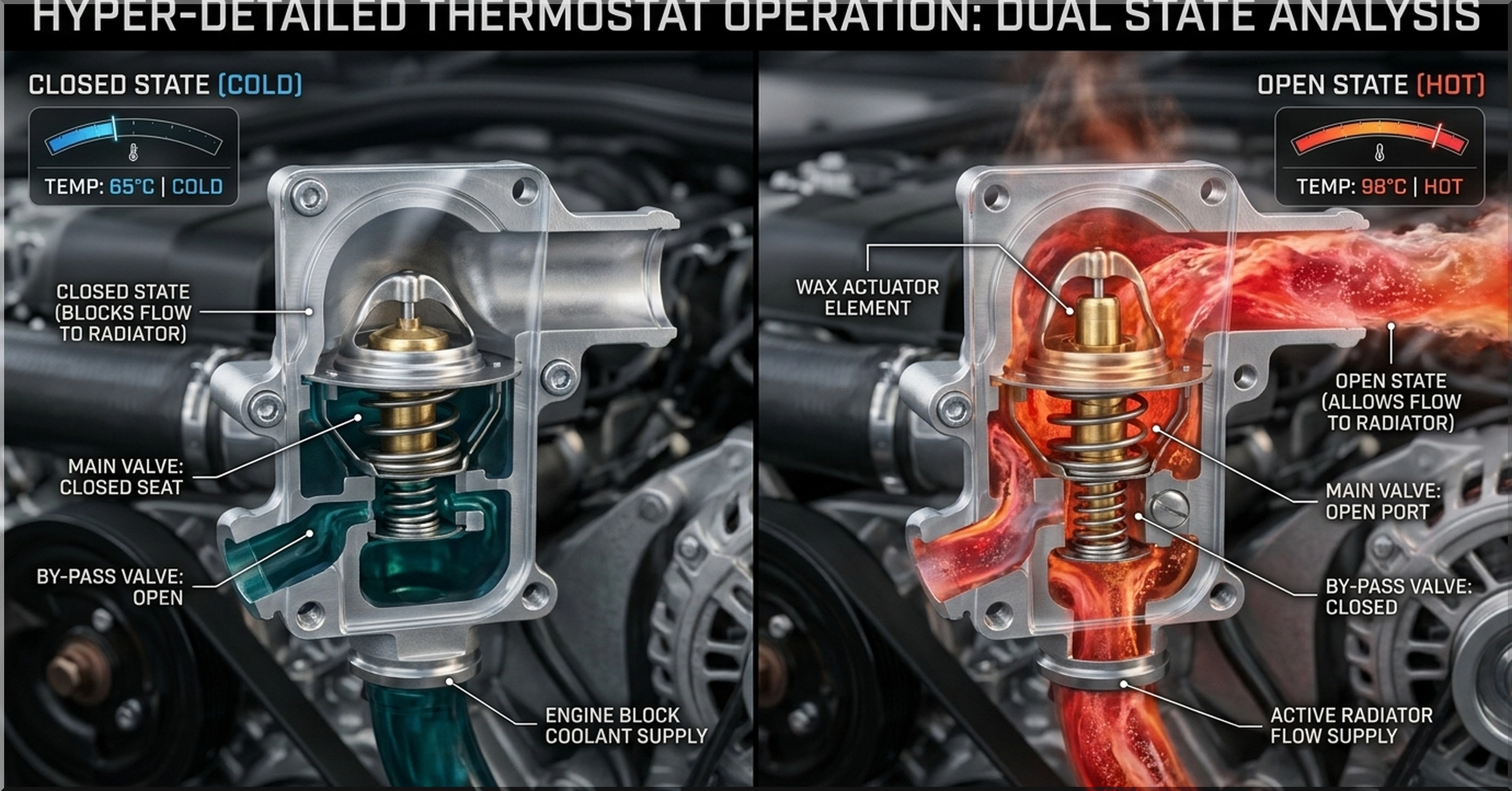
A cold engine needs to warm quickly. The thermostat stays shut and keeps coolant in the engine's bypass circuit. At its rated temperature, the valve opens and sends hot coolant through the radiator.
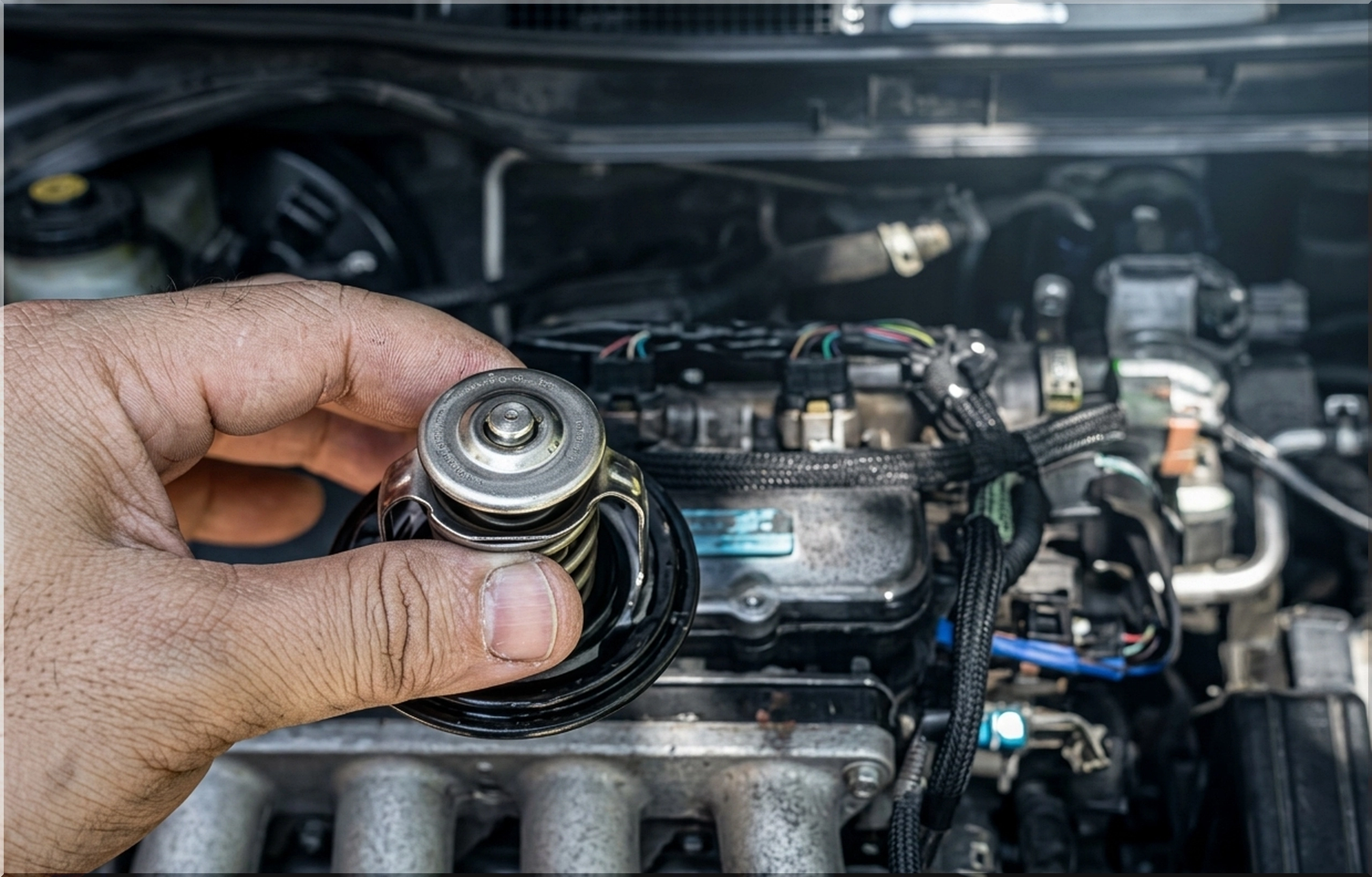
Many thermostats use a sealed wax pellet. Heat expands the wax, pushes a piston, and opens the valve. Cooling lets a spring close it. Many units start opening around 180 to 205 degrees Fahrenheit, or 82 to 96 degrees Celsius. The maker sets the correct rating.
Operating Temperature
Operating temperature means the designed heat range where the engine, oil, heater, and emissions hardware work properly.
Symptoms of a Thermostat Stuck Open
An open valve sends coolant through the radiator too early. Outside air strips away heat before the engine reaches its intended range. Cold weather makes the fault easier to spot.
Common stuck-open thermostat symptoms include:
- The gauge stays below its familiar position after 10 to 20 minutes of driving.
- Warm-up takes much longer than it did before.
- The heater blows lukewarm air, mainly at idle or in cold weather.
- The check engine light appears with code P0128.
- Fuel use rises without a clear change in traffic, tires, or driving habits.
- The gauge drops during steady highway driving in cold air.
P0128 means coolant temperature rose too slowly or stayed below the expected range. A stuck-open thermostat commonly triggers it. Low coolant, a faulty sensor, wiring trouble, or extreme cold can also play a role. A code identifies a failed test, not one proven bad part.
Risks of Driving With the Thermostat Stuck Open
A stuck-open valve poses less immediate danger than a closed one, but it still needs repair. Prolonged warm-up can reduce fuel economy and raise emissions. Weak heat can also slow windshield defrosting.
Long periods below the designed range can increase deposits and wear. The oil also takes longer to shed moisture.
Can You Drive With a Thermostat Stuck Open?
A short drive to a shop may present limited risk if the gauge stays low and coolant remains stable. Stop if temperature rises, coolant leaks, steam appears, or the heater suddenly turns cold.
Symptoms of a Thermostat Stuck Closed
A closed valve blocks the main route to the radiator. The engine keeps producing heat without releasing enough of it. Temperature can rise quickly.
Watch for these stuck-closed thermostat symptoms:
- The gauge climbs rapidly above its normal position.
- A red temperature light or overheat message appears.
- Steam escapes from the engine bay.
- The coolant reservoir bubbles or pushes fluid out.
- One radiator area stays much cooler while the engine side grows dangerously hot.
Cabin heat offers an unreliable clue. It may blow very hot, then turn cold if boiling coolant, a leak, or trapped air interrupts flow. Do not use heater output as permission to keep driving.
Risks of Driving With the Thermostat Stuck Closed
This failure needs immediate action. Excess heat can warp a cylinder head, damage the head gasket, thin the oil, and crack plastic cooling parts. A small valve can quickly hand you a bill with several extra zeros. It has terrible manners that way.
Steam around the temperature sensor can produce a misleading gauge reading. If the needle drops suddenly after overheating, do not assume the engine cooled safely.
What to Do When the Temperature Gauge Rises
Act early. The difference between a thermostat repair and major engine work may come down to a few minutes.
- Reduce engine load. Turn off the air conditioning and ease off the accelerator.
- Move to a safe location. Use your warning lights and pull away from traffic.
- Shut off the engine. Do not let it idle while you inspect the dash.
- Wait for steam to clear. Avoid opening the hood while hot coolant sprays or heavy steam escapes.
- Never open a hot radiator cap or pressurized reservoir. Escaping coolant can cause severe burns.
- Arrange a tow. Driving again can turn a modest repair into engine replacement.
After full cooling, inspect the reservoir from outside. Low coolant, wet hoses, residue, or a puddle signals a leak.
Pro-Tip: Do Not Trust the Heater Trick
Maximum cabin heat may help briefly while you reach a safe shoulder. It does not repair blocked coolant flow. Never use it to finish the trip.
How to Tell Which Thermostat Failure You Have
Start with a cold engine and correct coolant level. Keep hands, clothing, and tools away from fans and belts; an electric fan can start without warning.
Then use this diagnostic sequence:
- Scan for trouble codes and record freeze-frame data before clearing anything.
- Watch live coolant temperature from a cold start with an OBD2 scanner.
- Compare the cold reading with outside temperature. A large mismatch may point to a sensor fault.
- Track the temperature rise during idle and a short drive.
- Compare the thermostat housing and radiator hoses with an infrared thermometer.
- Check fan operation, visible leaks, and cabin heat.
A healthy thermostat produces a steady warm-up. Early heat on the radiator side may suggest an open valve. A hot engine paired with a cool radiator inlet may suggest a closed valve. Check the engine's hose diagram before interpreting readings.
Do not touch hot hoses or remove a cap to watch coolant movement. A scan tool and infrared thermometer provide safer evidence.
Problems That Can Mimic a Bad Thermostat
Other cooling faults can imitate thermostat trouble:
- Low coolant or trapped air can cause gauge swings and disappearing cabin heat.
- A failed radiator fan often causes overheating in slow traffic or at idle.
- A worn water pump may reduce circulation, leak coolant, or make noise.
- A restricted radiator may struggle under hills, towing, heat, or heavy traffic.
- A faulty coolant temperature sensor may report false cold or hot readings.
- A leaking head gasket may add combustion gas to the cooling system and force coolant out.
These faults can occur alongside a bad thermostat. Check coolant condition, system pressure, fan commands, sensor accuracy, pump circulation, and radiator heat distribution.
Replacing a Failed Thermostat the Right Way
Once testing confirms failure, replace the thermostat with the correct temperature rating. Do not fit a colder unit to hide an overheating problem. That shortcut may slow warm-up, set P0128, reduce heater output, and leave the original cooling fault untouched.
A sound repair includes a new seal, specified coolant, correct fastener torque, and careful air bleeding. Trapped air can cause fresh overheating after a successful part swap.
Inspect the housing, hoses, clamps, water pump area, and connectors. After severe overheating, test the coolant for combustion gas and inspect the oil.
Your Next Step
Match the gauge pattern to the two failure modes. Low and slow usually points to stuck open; fast and hot points to stuck closed. Scan P0128 complaints, check coolant only when cold, and compare real temperature readings before buying parts.
If the engine overheats, stop and tow it. If it runs cold, book diagnosis soon. Calm observation now can spare your engine, fuel budget, and future self from a very expensive afternoon.
- 33 views