Bad car thermostat symptoms usually include overheating, a temperature gauge that swings unexpectedly, slow engine warm-up, weak cabin heat, coolant leaks, or a P0128 check-engine code. If the gauge enters the red zone or steam rises from under the hood, pull over safely and shut off the engine. A small thermostat can cause a very expensive afternoon.
What a Car Thermostat Does
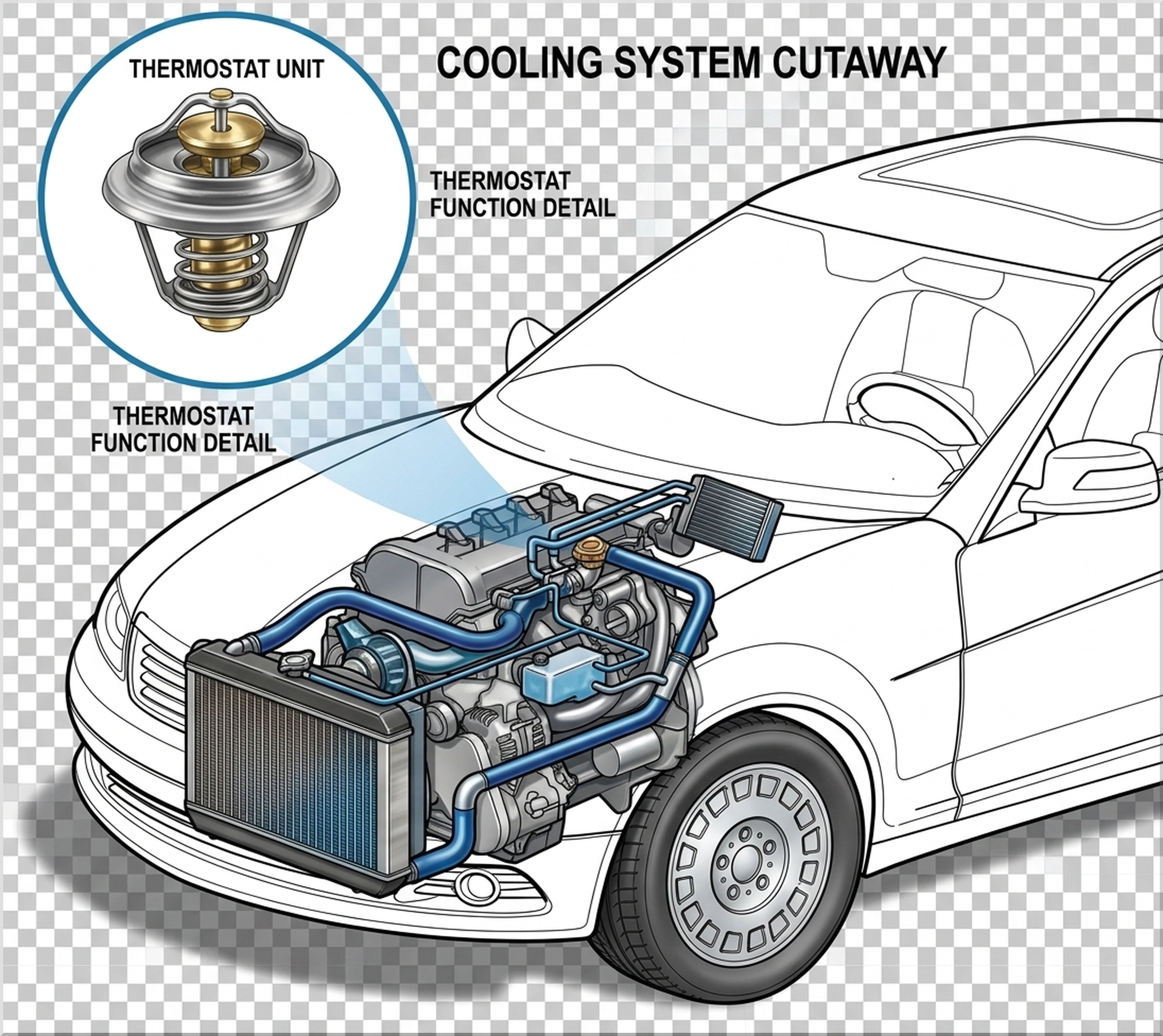
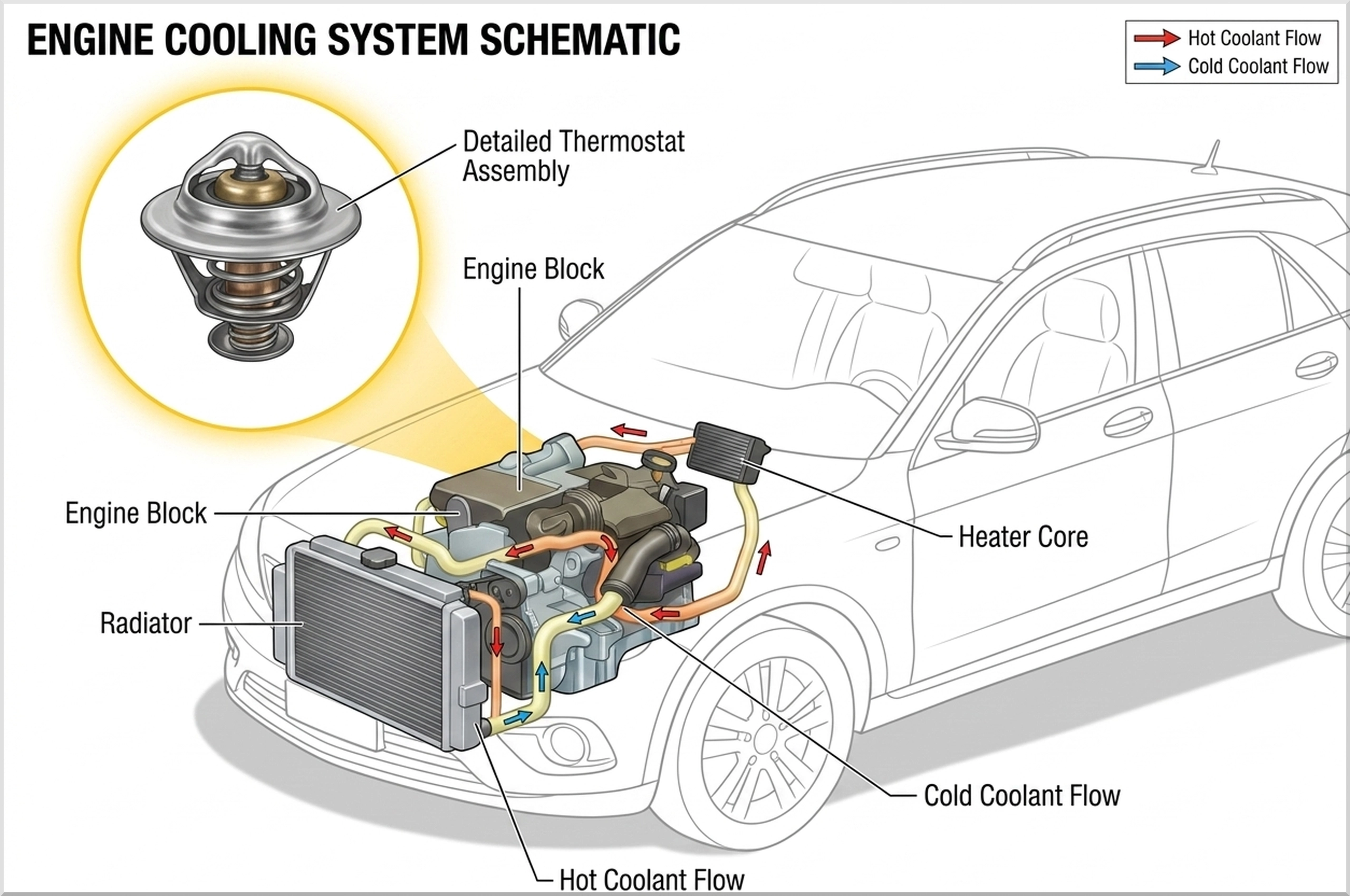
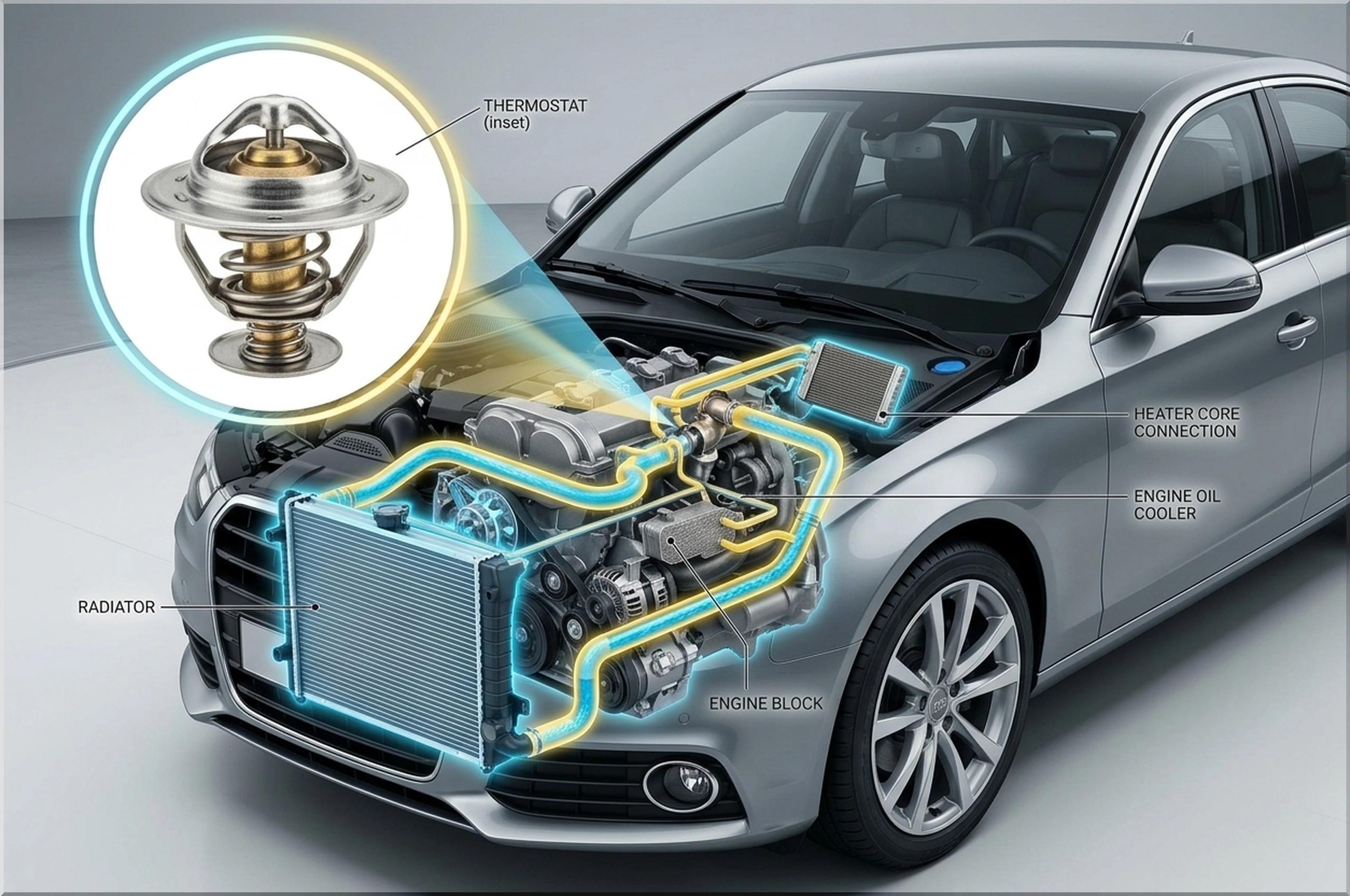
The thermostat acts as a temperature-controlled valve between the engine and radiator. When the engine starts cold, the valve stays closed. That choice keeps coolant inside the engine, helping it reach its designed operating temperature quickly.
As the coolant heats up, a wax pellet inside the thermostat expands. That movement opens the valve and sends hot coolant toward the radiator. Air passing through the radiator removes heat before the coolant returns to the engine.
A failed unit usually sticks open, sticks closed, or moves unevenly. Each failure creates a different pattern.
| Thermostat condition | Typical gauge behavior | Common result | Driving risk |
|---|---|---|---|
| Stuck closed | Temperature climbs rapidly | Coolant fails to reach radiator | Severe |
| Stuck open | Engine warms very slowly | Engine runs too cool | Moderate |
| Sticking intermittently | Gauge rises and falls sharply | Coolant flow changes at the wrong time | High |
| Leaking housing or seal | Temperature may rise as coolant drops | Cooling system loses pressure and fluid | High |
9 Bad Car Thermostat Symptoms
One clue rarely proves that the thermostat failed. Several clues appearing together make a stronger case. Watch the gauge, cabin heater, coolant level, and scan data as one connected system.
1. The Engine Overheats Quickly
A thermostat stuck closed blocks coolant from flowing through the radiator. Heat builds fast, often within minutes after startup. The gauge may climb toward hot even during an easy drive.
Excess heat can warp the cylinder head, damage seals, or ruin the head gasket. Stop driving if the warning light appears or the needle enters the red zone. A weak water pump, failed fan, low coolant, or clogged radiator can cause similar trouble.
2. The Temperature Gauge Swings Up and Down
A sticking thermostat may open late, then snap open. The gauge climbs above normal, drops suddenly, and rises again. Drivers often describe the needle as restless.
Air trapped in the system can mimic that pattern. So can a faulty coolant temperature sensor. Compare dashboard readings with live scan-tool data before replacing parts.
3. The Engine Takes Too Long to Warm Up
A thermostat stuck open sends coolant to the radiator from the first cold start. The engine then struggles to reach its intended operating range, mainly in cold weather or at highway speed.
Your gauge may stay near cold. The engine computer may also keep a richer fuel mixture active longer than needed.
4. The Cabin Heater Blows Cool or Lukewarm Air
Your heater relies on hot engine coolant. If a stuck-open thermostat keeps coolant too cool, the vents may deliver weak heat even after a long drive. Winter turns this fault from mildly annoying into a very persuasive repair request.
Low coolant or a clogged heater core can cause similar symptoms. Check coolant level only after the engine cools fully.
5. The Check Engine Light Comes On
Modern engine computers track how quickly coolant reaches the expected temperature. If warm-up takes too long, the computer may store P0128, often described as coolant temperature below the thermostat-regulating range.
P0128 frequently points toward a stuck-open thermostat, but low coolant, a weak sensor, or damaged wiring can affect the reading. Read live data before buying parts. Other codes may appear on vehicles with electronically controlled thermostats.
6. Coolant Leaks Around the Thermostat Housing
The thermostat sits inside a housing sealed by a gasket or O-ring. Age, heat cycles, overtightened bolts, corrosion, or a cracked plastic housing can cause seepage. Look for wet coolant, chalky residue, or staining near the housing and connected hose.
A small leak can lower the coolant enough to cause overheating. Inspect the sealing surface and nearby hose connection.
7. Steam or a Sweet Coolant Smell Appears
Steam under the hood signals escaping or boiling coolant. Many coolants also produce a sweet odor. Either sign deserves prompt attention.
Pull over, turn off the engine, and keep your hands away from the radiator cap and pressurized reservoir. Never open a hot radiator cap. Scalding coolant can erupt with enough force to cause severe burns.
Steam may come from a failed hose, radiator, reservoir, water pump, or housing. Let the engine cool before checking anything.
8. Fuel Economy Drops
An engine that runs too cool may use extra fuel while the computer tries to speed warm-up. The increase may appear gradually, so drivers often blame traffic, weather, or tires first.
A thermostat fault becomes more likely when lower fuel economy appears with slow warm-up and weak cabin heat. Compare coolant temperature through an OBD2 scanner.
9. The Engine Runs Poorly or Feels Sluggish
Temperature affects fuel control, oil flow, and combustion. An overheated engine may lose power, ping, idle roughly, or enter a reduced-power mode.
Stop immediately if poor running arrives with a hot gauge, warning light, or steam. Continued driving can turn a thermostat repair into major engine work.
Stuck Open vs. Stuck Closed: The Fast Distinction
The easiest first check comes from gauge behavior.
- Stuck-open thermostat: Slow warm-up, low gauge reading, weak heater, possible P0128, and reduced fuel economy.
- Stuck-closed thermostat: Rapid overheating, hot gauge, possible steam, coolant pressure, and urgent engine risk.
- Intermittently sticking thermostat: Sharp temperature changes that repeat without a steady pattern.
Cooling faults often share symptoms. Confirm the cause before installing a part.
Can You Drive With a Bad Thermostat?
You should not drive with a thermostat stuck closed or with any active overheating. Arrange a tow. The tow bill will usually cost far less than cylinder-head or head-gasket work.
A stuck-open thermostat creates less immediate danger, yet it may waste fuel, weaken cabin heat, and store an emissions code. Schedule repair soon.
If you see steam, smell strong coolant, lose cabin heat suddenly while the gauge climbs, or receive an overheating warning, act at once.
- Move to a safe location and switch off the engine.
- Turn on hazard lights and keep clear of moving traffic.
- Wait for the engine to cool completely.
- Do not remove a hot radiator or reservoir cap.
- Call roadside assistance if coolant escaped or overheating returns.
How to Check a Suspected Bad Thermostat
Start with simple checks that keep you away from hot, pressurized coolant.
Check the Coolant Level When Cold
Park on level ground and let the engine cool fully. Inspect the overflow reservoir against its cold-level marks. Some systems require a separate radiator-level check, but only open the cap when the engine feels completely cold.
Low coolant can create misleading thermostat symptoms. Find the leak instead of repeatedly topping off the system.
Watch Warm-Up Behavior
Start the cold engine and watch the dashboard gauge. A normal system should rise steadily, then settle near its usual position. A reading that stays cold, climbs too fast, or swings sharply needs further testing.
An OBD2 scanner gives a more useful coolant-temperature reading on compatible vehicles.
Inspect for Leaks and Residue
With the engine cold, inspect the thermostat housing, radiator hoses, reservoir, radiator seams, and water-pump area. Dried coolant may leave white, pink, green, blue, or orange residue, depending on coolant type.
Do not mix coolant by color alone. Use the vehicle maker's specified coolant chemistry.
Compare Scan Data
Read stored codes and live coolant temperature. A P0128 code plus slow warm-up strongly supports a stuck-open thermostat. A rapid temperature increase may support restricted flow, though the water pump, fan, radiator, or coolant level still needs inspection.
What Else Can Cause the Same Symptoms?
The thermostat gets blamed for many cooling problems because it costs less than an engine. Fair enough. Still, swapping it without testing can waste time and leave the real fault untouched.
Common look-alikes include:
- Low coolant from an external or internal leak
- A failed electric radiator fan or fan control circuit
- A worn water pump or damaged impeller
- A clogged radiator
- Air trapped after cooling-system service
- A faulty coolant temperature sensor
- A restricted heater core
- A leaking head gasket or cracked cylinder head
A pressure test can expose external leaks. A combustion-gas test can detect exhaust gases in the coolant.
Thermostat Replacement: What Good Work Includes
A proper thermostat replacement involves more than swapping the valve. The technician should use the correct opening temperature, install a new seal, inspect the housing, refill with approved coolant, remove trapped air, and check for leaks.
Air pockets can block circulation, remove cabin heat, and cause new temperature spikes. Some vehicles require bleed screws or vacuum-fill equipment.
DIY difficulty ranges from easy to deeply inconvenient. On one engine, the housing sits beside the upper radiator hose. On another, intake parts, covers, or accessories block access. Consult model-specific service instructions and torque values before turning a wrench.
Pro-Tip
Buy parts by VIN or exact engine code, not by model name alone. One vehicle line may use several engines, thermostat temperatures, housing designs, and sensor setups.
Your Next Steps
Start with the temperature gauge and coolant level. Scan for codes if the check-engine light appears. Then inspect the housing and nearby hoses after the engine cools.
If the car overheats, leaks heavily, or produces steam, stop driving and arrange a tow. If it warms slowly and stores P0128, book a diagnosis soon. Confirming the cause now protects the engine and keeps a modest cooling-system repair from becoming a four-figure lesson.
- 40 views