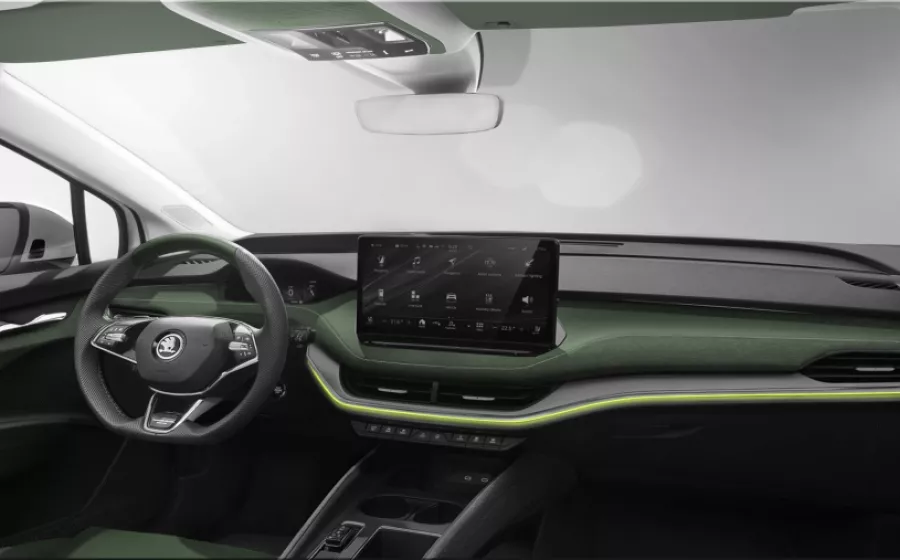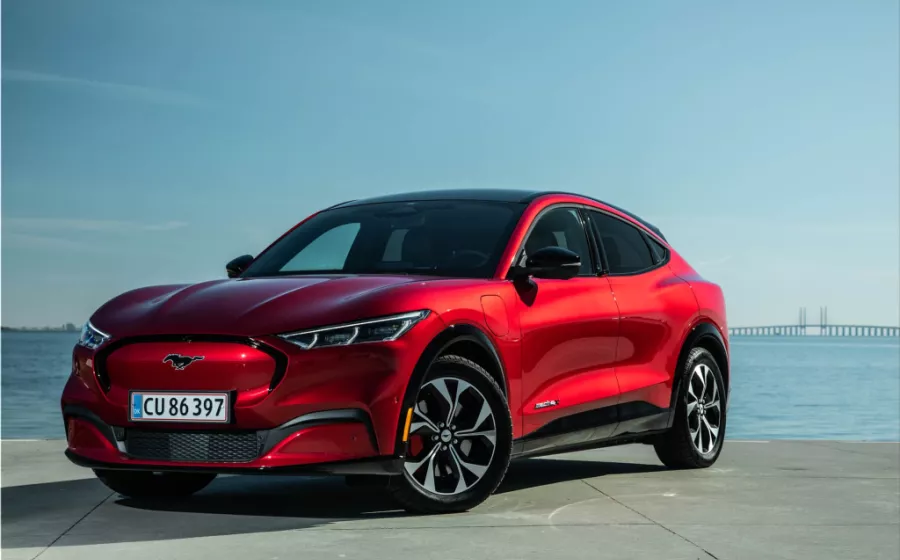
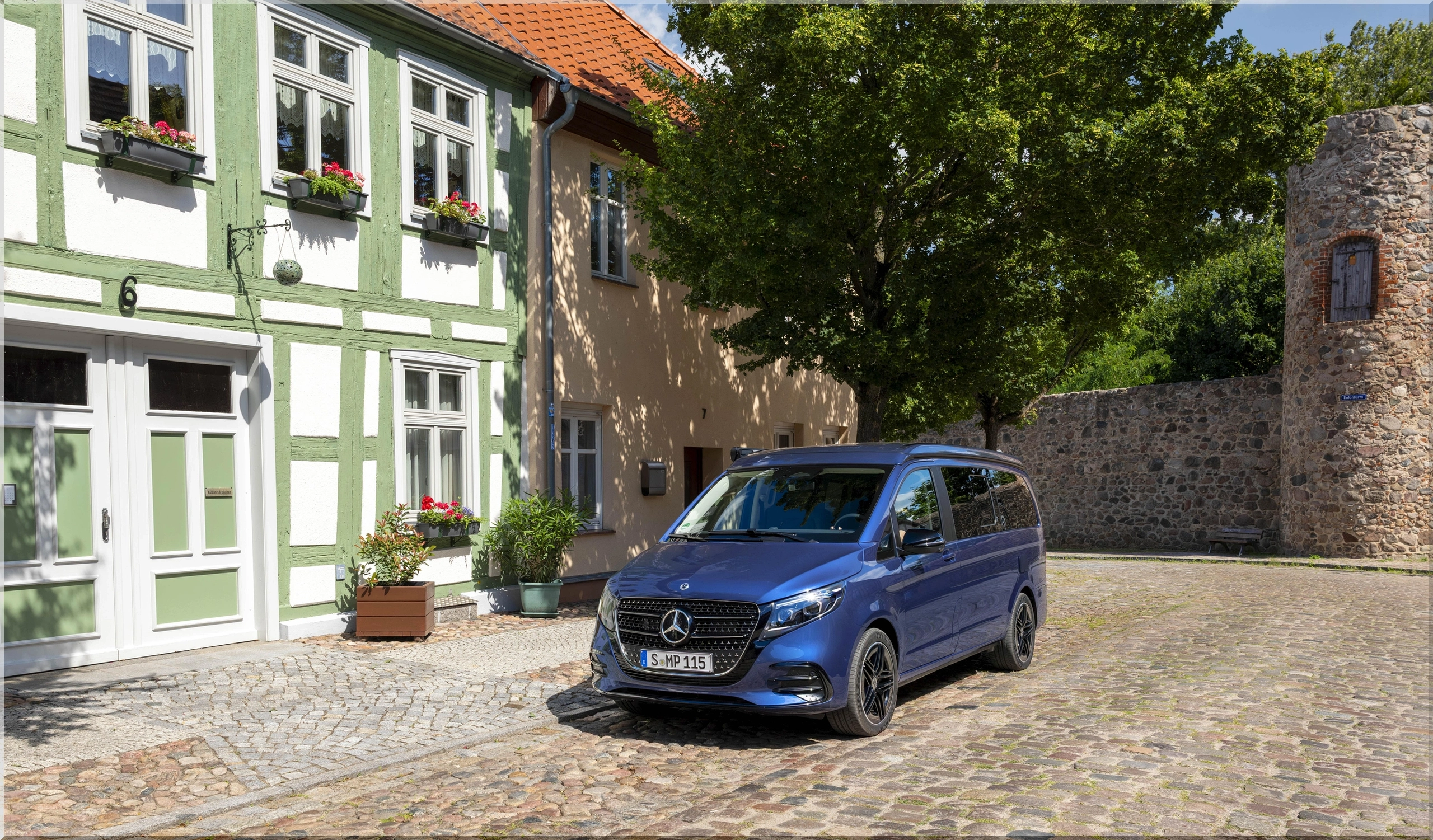
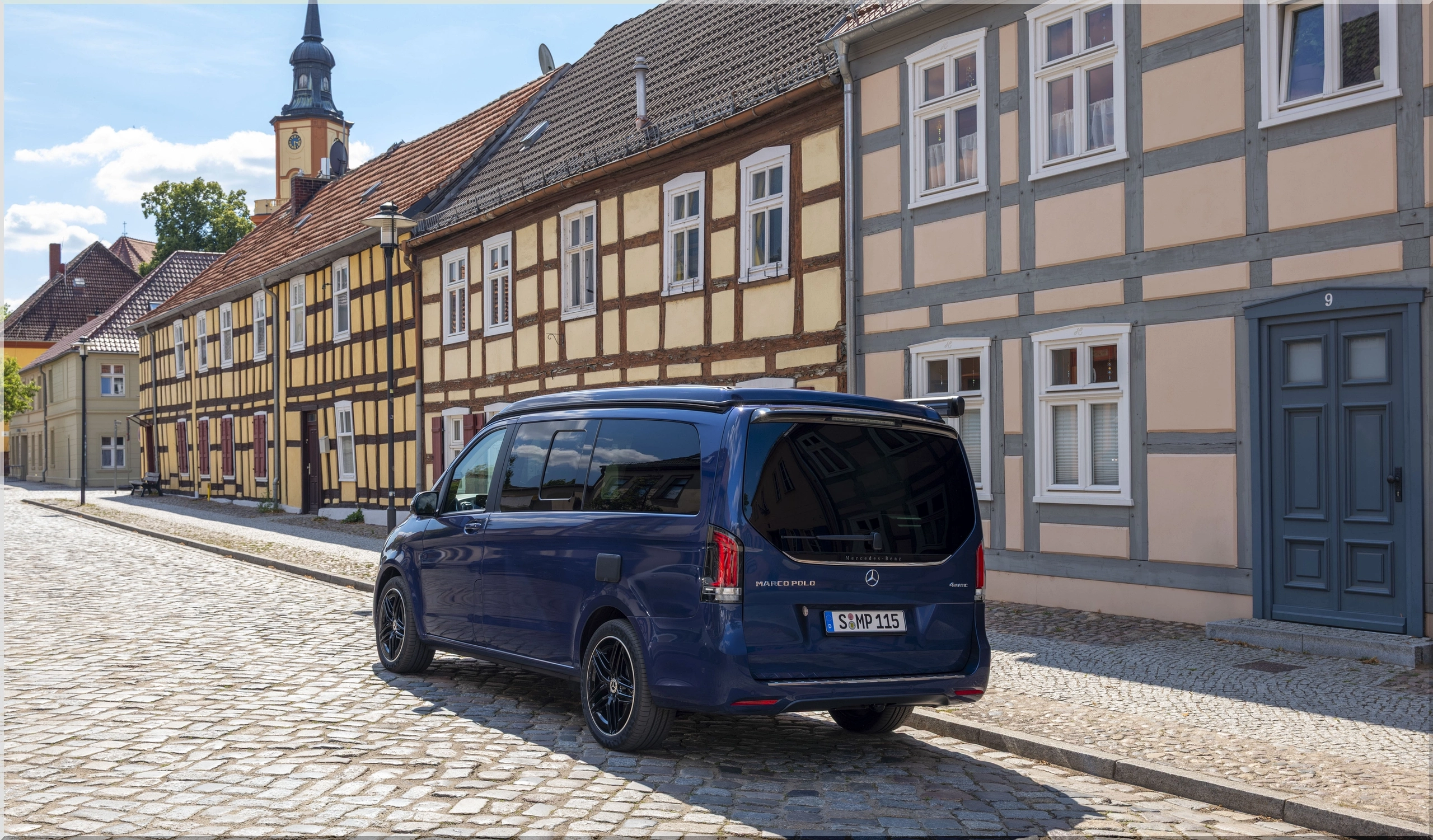
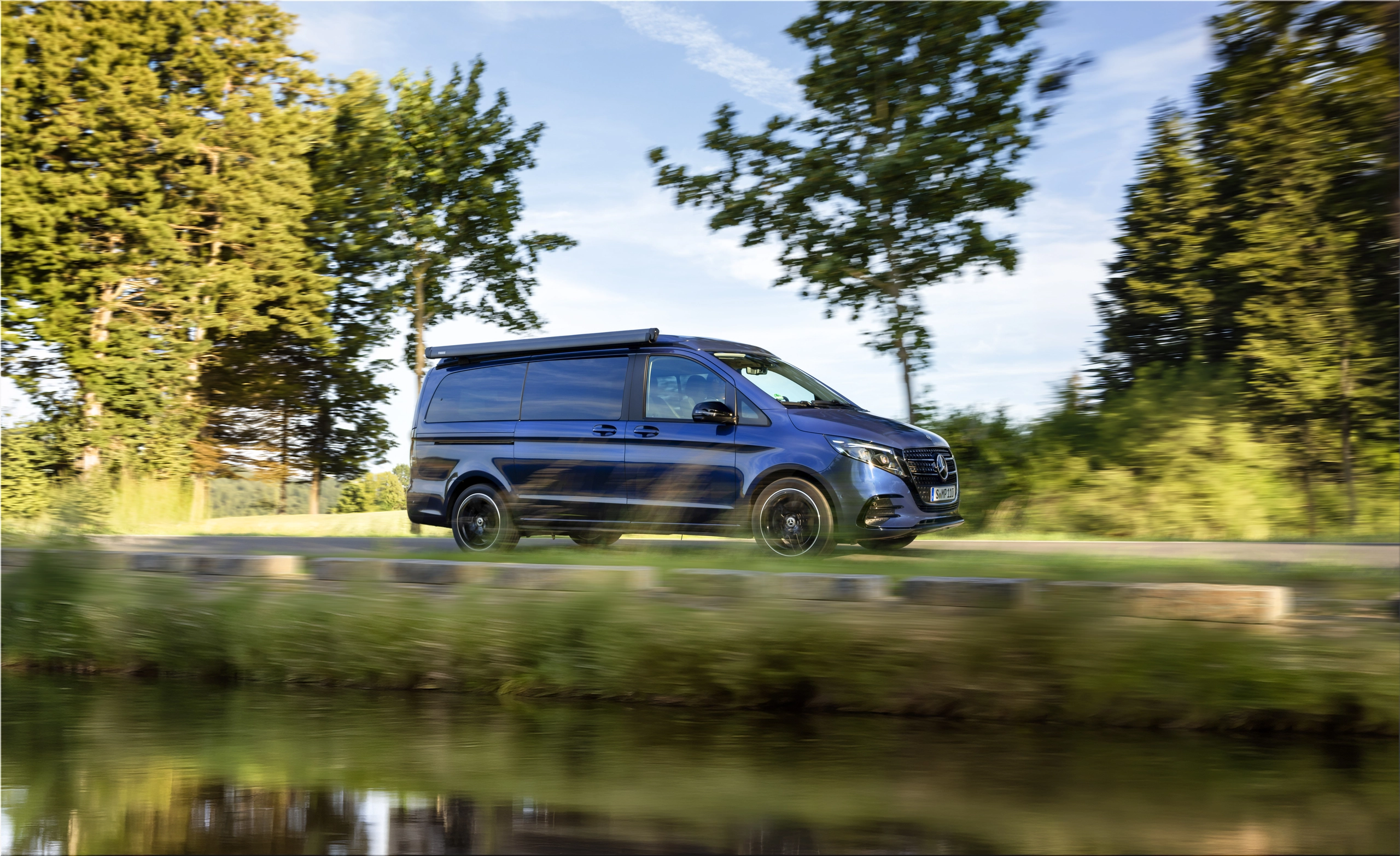
The 2026 Mercedes-Benz Marco Polo combines four seats, four sleeping spaces, an integrated kitchen, app-controlled camping systems, and a sub-2-meter body height. Its redesigned aluminum pop-up roof, new audio system, and self-leveling AIRMATIC suspension strengthen its position as a premium camper van that can still handle daily driving.
Mercedes-Benz will present the updated Marco Polo camper van at the Elmia Caravan and Motorhome exhibition in Sweden from September 9-13, 2026. The public debut coincides with the model's Swedish sales launch and marks a major production change: Mercedes-Benz now builds the entire camper conversion within its own manufacturing network.
That shift carries practical significance. The automaker gains direct control over the base vehicle, interior installation, software integration, quality checks, and final assembly. Buyers receive one factory-developed vehicle instead of a passenger van that leaves the production chain for an external conversion.
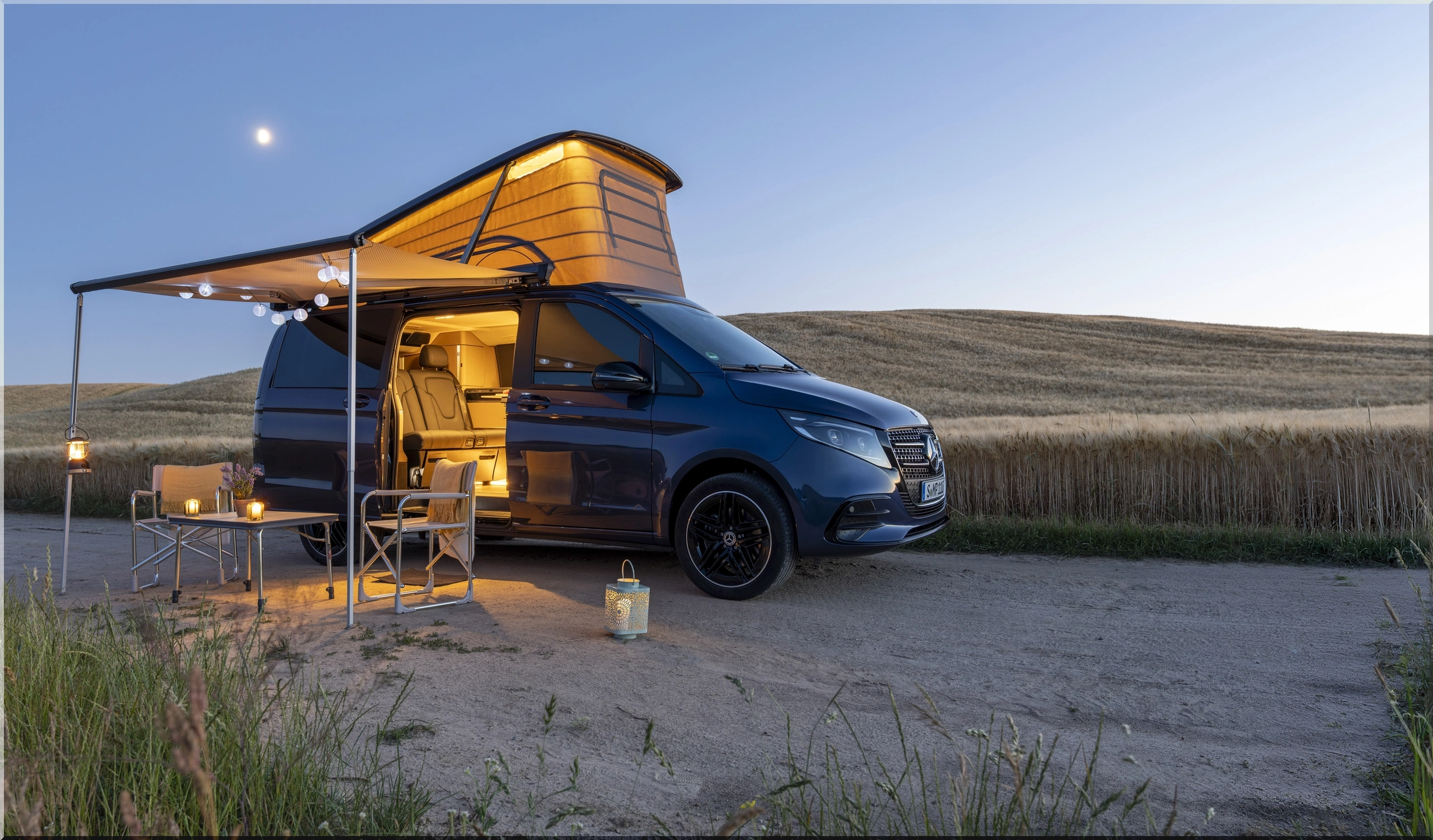
Swedish pricing starts at approximately $106,300 for the full Marco Polo and $85,700 for the Marco Polo Horizon, based on early September 2026 exchange rates. Taxes, equipment, and regional specifications will affect prices in other markets.
The New Aluminum Roof Solves Several Camper Problems
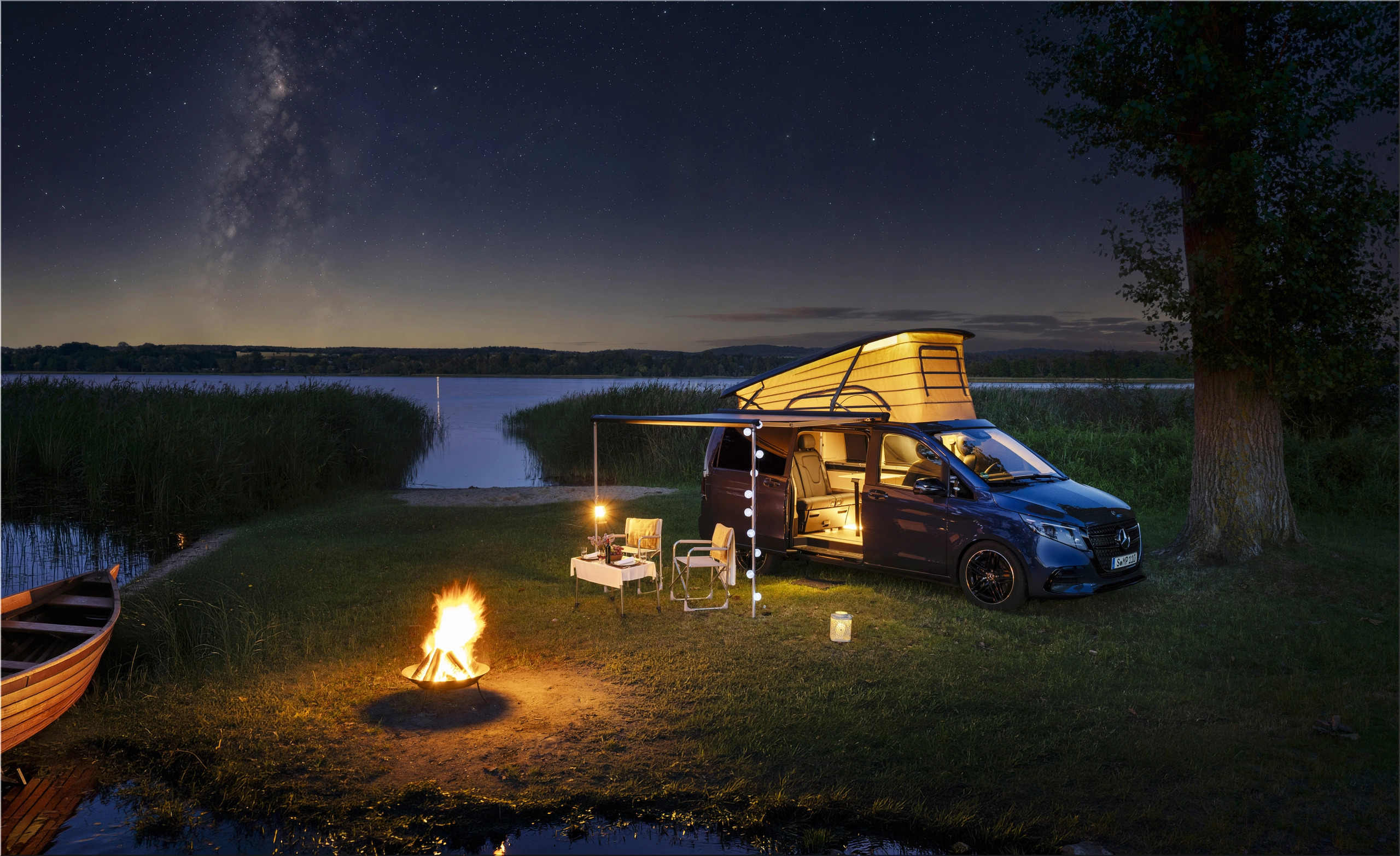
The redesigned aluminum pop-up roof delivers the clearest engineering improvement. Aluminum lowers weight at the highest point of the vehicle, where every extra pound can affect body movement and handling. The stronger structure also improves weather resistance and thermal insulation.
Mercedes-Benz added 100 mm, or 3.9 inches, of interior height near the rear when users raise the roof. That extra clearance creates a less restricted standing area around the kitchen and rear cabin, where owners spend much of their stationary time.
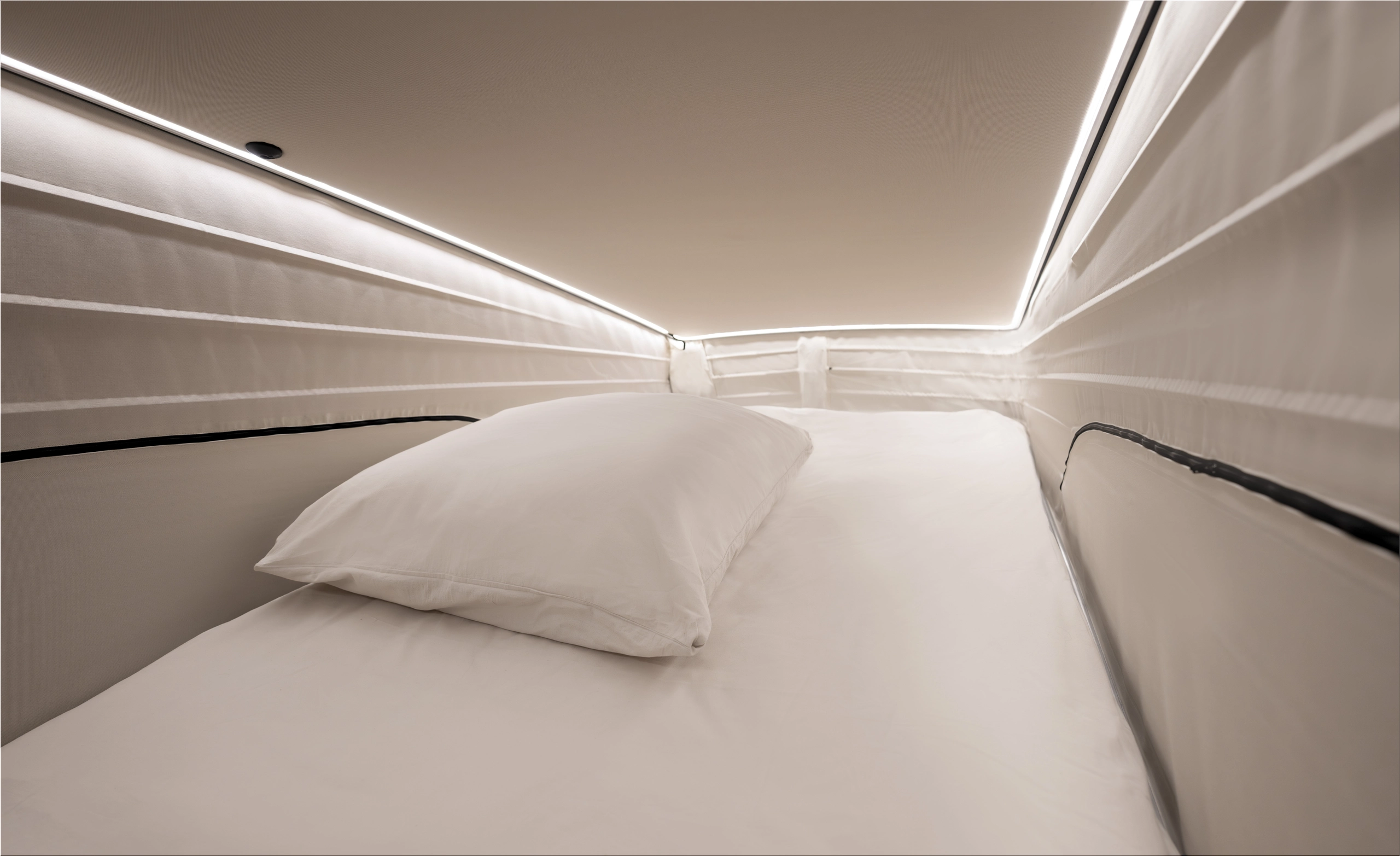
A roof window introduces daylight and provides an open view above the bed. Adjustable LED lighting lets occupants control brightness and atmosphere without adding portable lamps or draining separate battery-powered lights.
The roof bed measures 2,050 x 1,130 mm, or 80.7 x 44.5 inches. Mercedes-Benz supports its cold-foam mattress with point-elastic spring elements, which spread body pressure more evenly than a thin mattress laid directly on a rigid roof panel.
Marco Polo Dimensions and Core Specifications
The Mercedes-Benz V-Class Marco Polo measures 5,140 mm long, 1,928 mm wide without mirrors, and 1,990 mm tall. In U.S. measurements, that equals 202.4 inches long, 75.9 inches wide, and 78.3 inches tall.
The height matters most. At under 2 meters, the Marco Polo fits beneath many European parking-garage barriers that exclude conventional motorhomes. Its 3,200-mm, or 126-inch, wheelbase also provides a relatively stable highway stance without stretching the body into full-size RV territory.
| Measurement | Metric | U.S. equivalent |
|---|---|---|
| Overall length | 5,140 mm | 202.4 in |
| Width without mirrors | 1,928 mm | 75.9 in |
| Width with mirrors | 2,249 mm | 88.5 in |
| Overall height | 1,990 mm | 78.3 in |
| Wheelbase | 3,200 mm | 126.0 in |
| Turning circle | 11.8 m | 38.7 ft |
| Maximum permitted weight | 3,100 kg | 6,834 lb |
| Cargo capacity in passenger configuration | Up to 4,630 liters | 163.5 cu ft |
The 11.8-meter turning circle remains reasonable for a 5.14-meter vehicle. Drivers still need to account for its 2,249-mm mirror-to-mirror width, but the Marco Polo occupies less road and parking space than a conventional coach-built motorhome.
Three Diesel Engines Cover Different Use Cases
Mercedes-Benz offers three versions of its 1,950 cc turbocharged four-cylinder diesel. Every engine connects to a 9G-TRONIC nine-speed automatic transmission, while selected configurations can add 4MATIC all-wheel drive.
| Version | Power | Torque | 0-62 mph | Top speed | WLTP consumption |
|---|---|---|---|---|---|
| Marco Polo 220 d | 163 hp | 380 Nm / 280 lb-ft | 12.3 sec | 117 mph | 32.7 mpg U.S. |
| Marco Polo 250 d | 190 hp | 440 Nm / 325 lb-ft | 10.7 sec | 124 mph | 31.8 mpg U.S. |
| Marco Polo 300 d | 237 hp | 500 Nm / 369 lb-ft | 8.8 sec | 134 mph | 31.8 mpg U.S. |
Looking at the data, the 250 d presents the most rational middle ground. It adds 60 Nm, or 44 lb-ft, over the 220 d, which helps when the vehicle carries four occupants, water, luggage, food, and camping equipment.
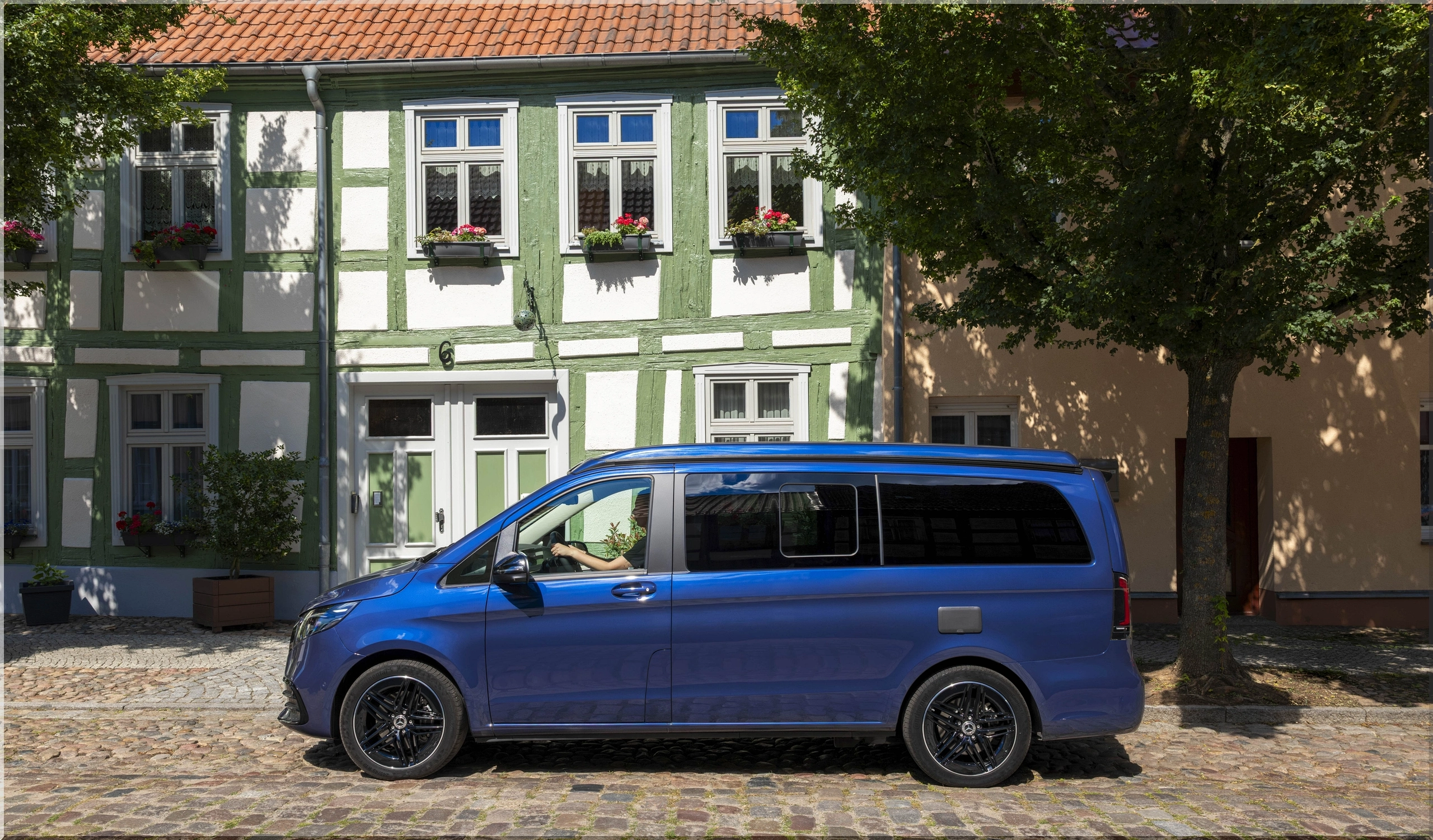
The Marco Polo 300 d targets drivers who expect faster highway passing or frequent mountain travel. Its 500 Nm output reduces the need for aggressive downshifts on inclines, although optional 4MATIC and a fully loaded cabin may raise real fuel consumption above the official rear-wheel-drive figure.
From an expert perspective, buyers should prioritize torque and drivetrain traction over acceleration. A camper spends far more time climbing grades, leaving wet campsites, and carrying weight than sprinting from a traffic light.
Four People Can Eat and Sleep Inside
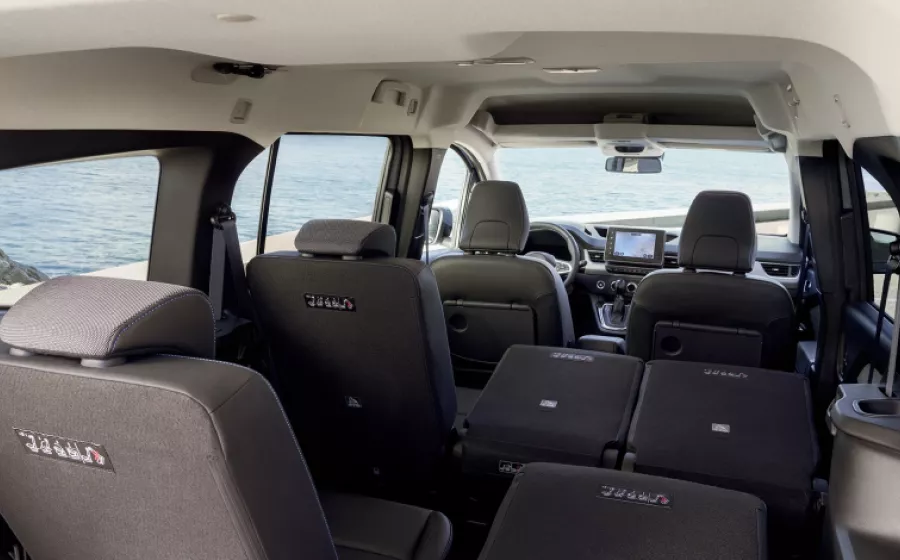
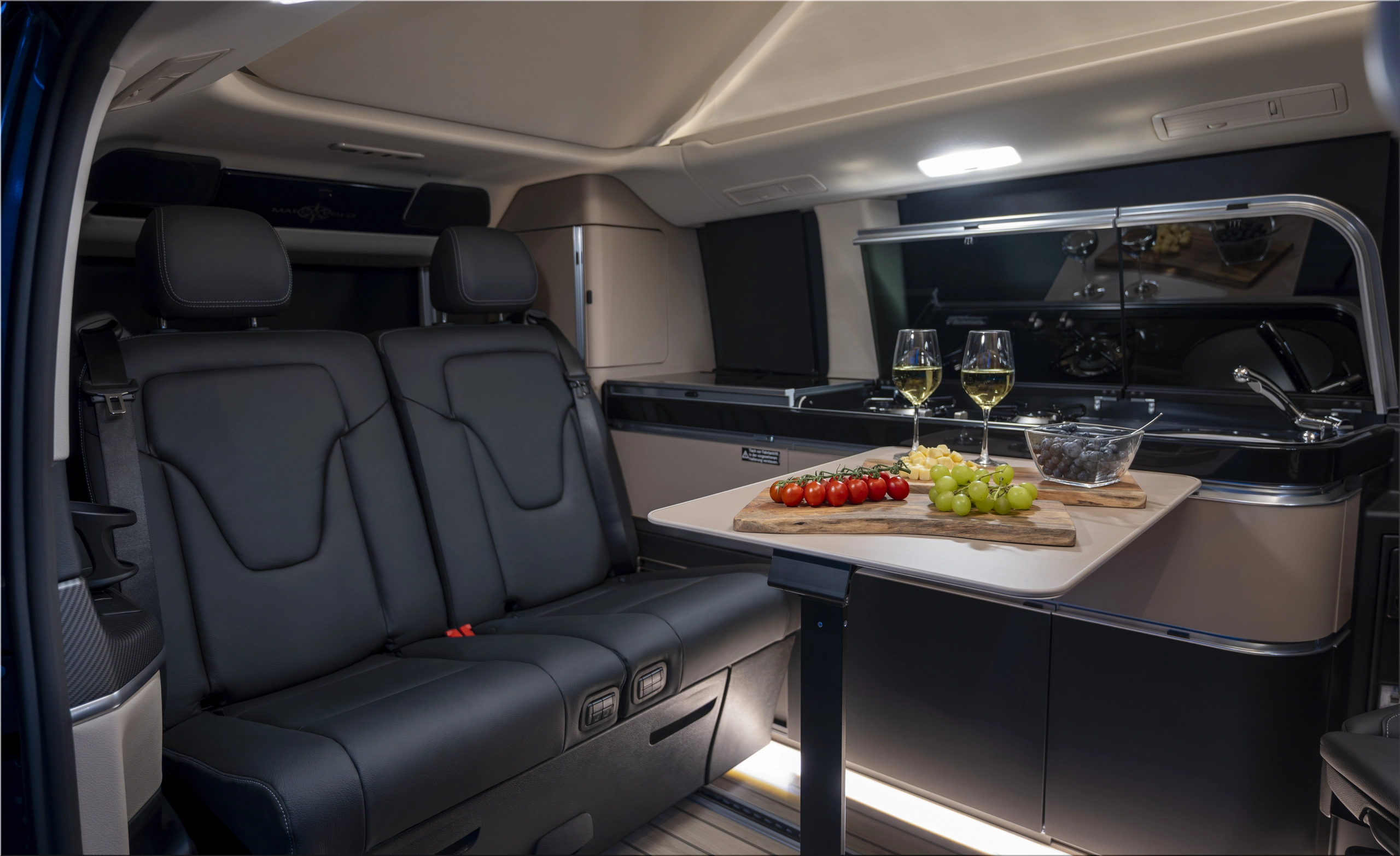
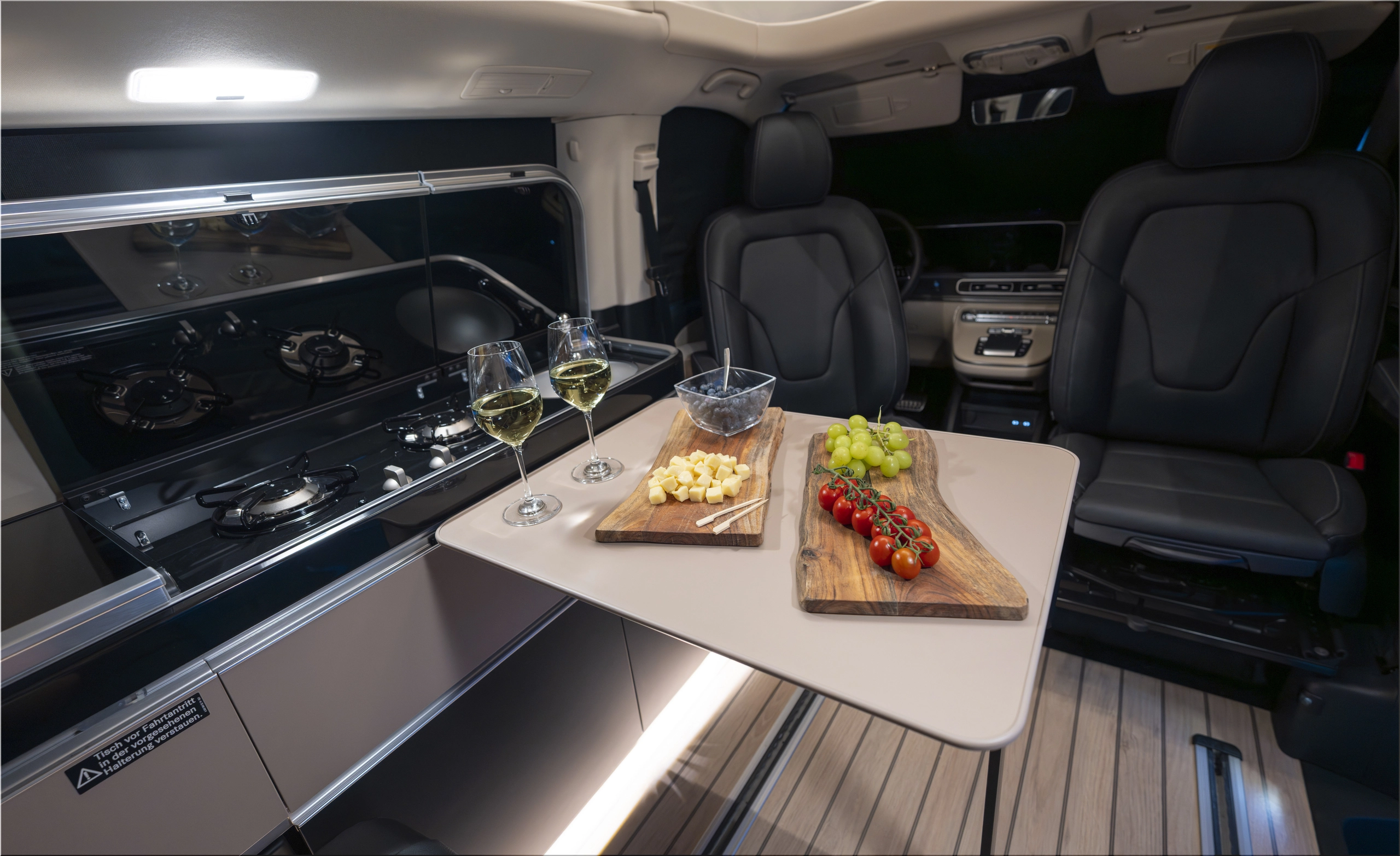
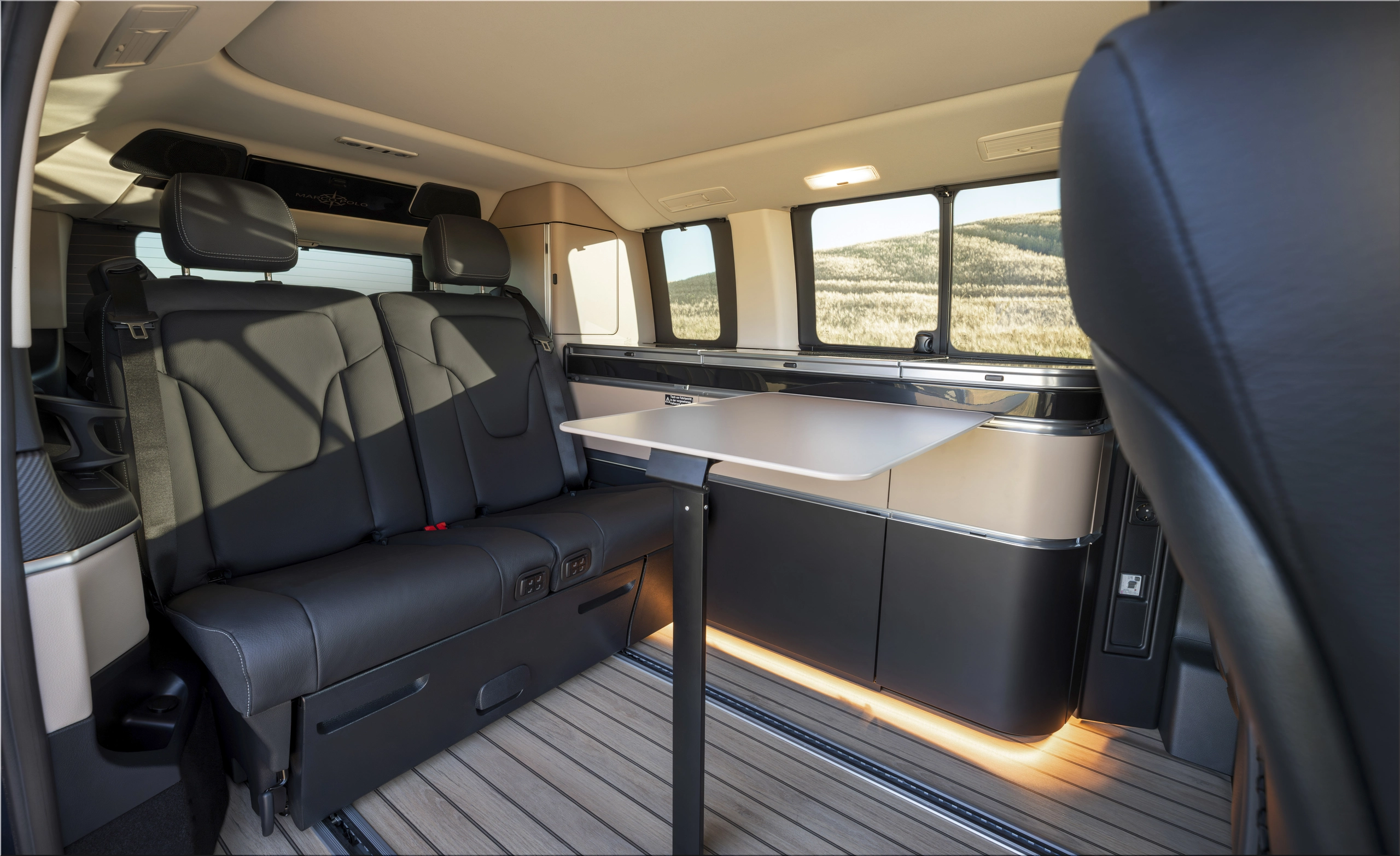
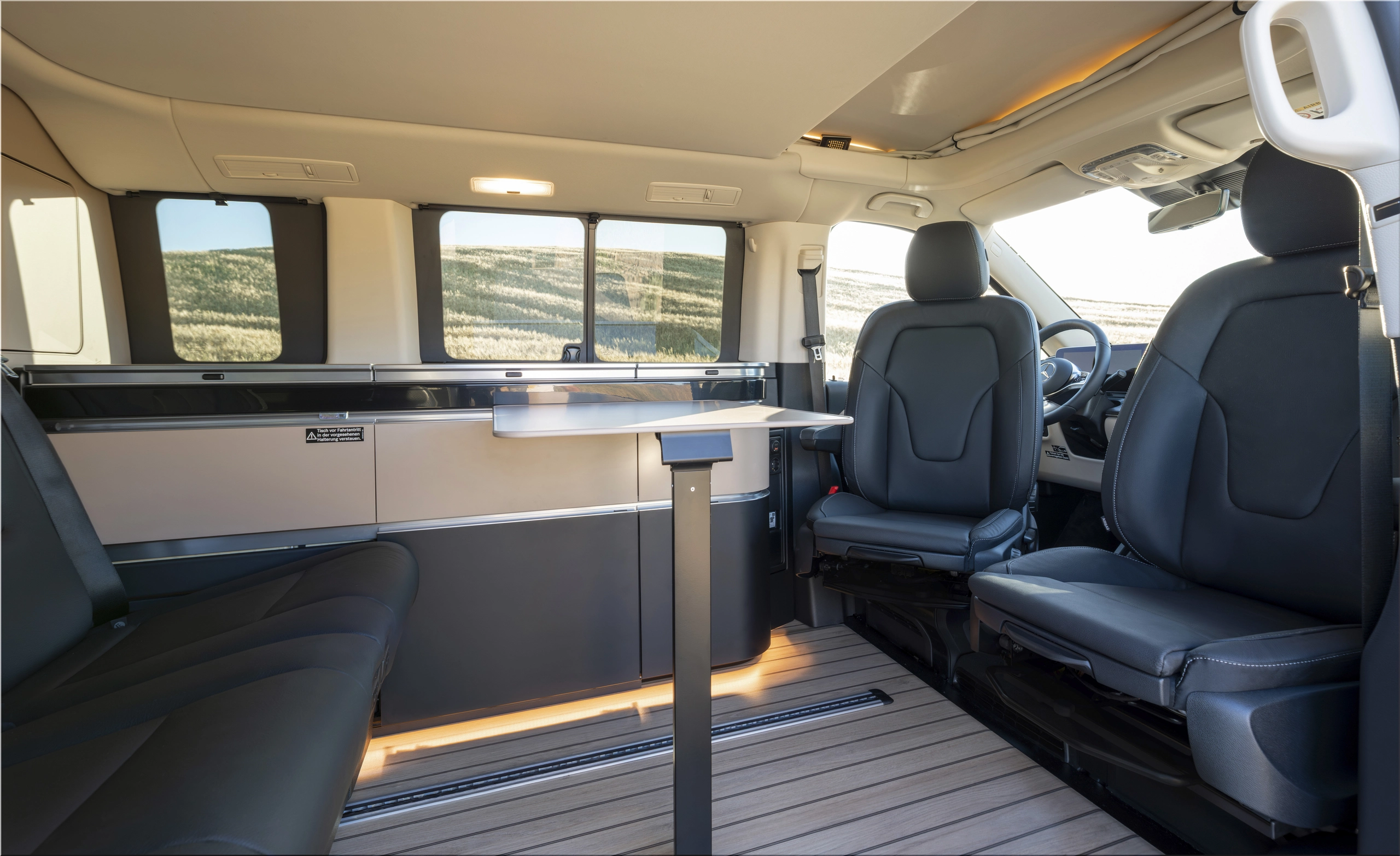
Mercedes-Benz designed the full Marco Polo around four occupants. Both front seats rotate toward the living area, while the sliding rear bench moves along floor rails and converts electrically into the lower bed.
The cabin provides two sleeping areas:
- Lower bed: 2,030 x 1,130 mm, or 79.9 x 44.5 inches
- Roof bed: 2,050 x 1,130 mm, or 80.7 x 44.5 inches
- Total sleeping capacity: Four people
- Travel seating: Four individual seating positions
- Dining arrangement: Rotating front seats, rear bench, and interior table
The lower bed uses electrically adjustable split backrests. Inflatable seat bolsters reduce pressure points and cover protruding belt buckles when occupants prepare the bed. That engineering detail addresses a common weakness in seat-to-bed camper layouts: cushions optimized for safe travel rarely create a flat sleeping surface.
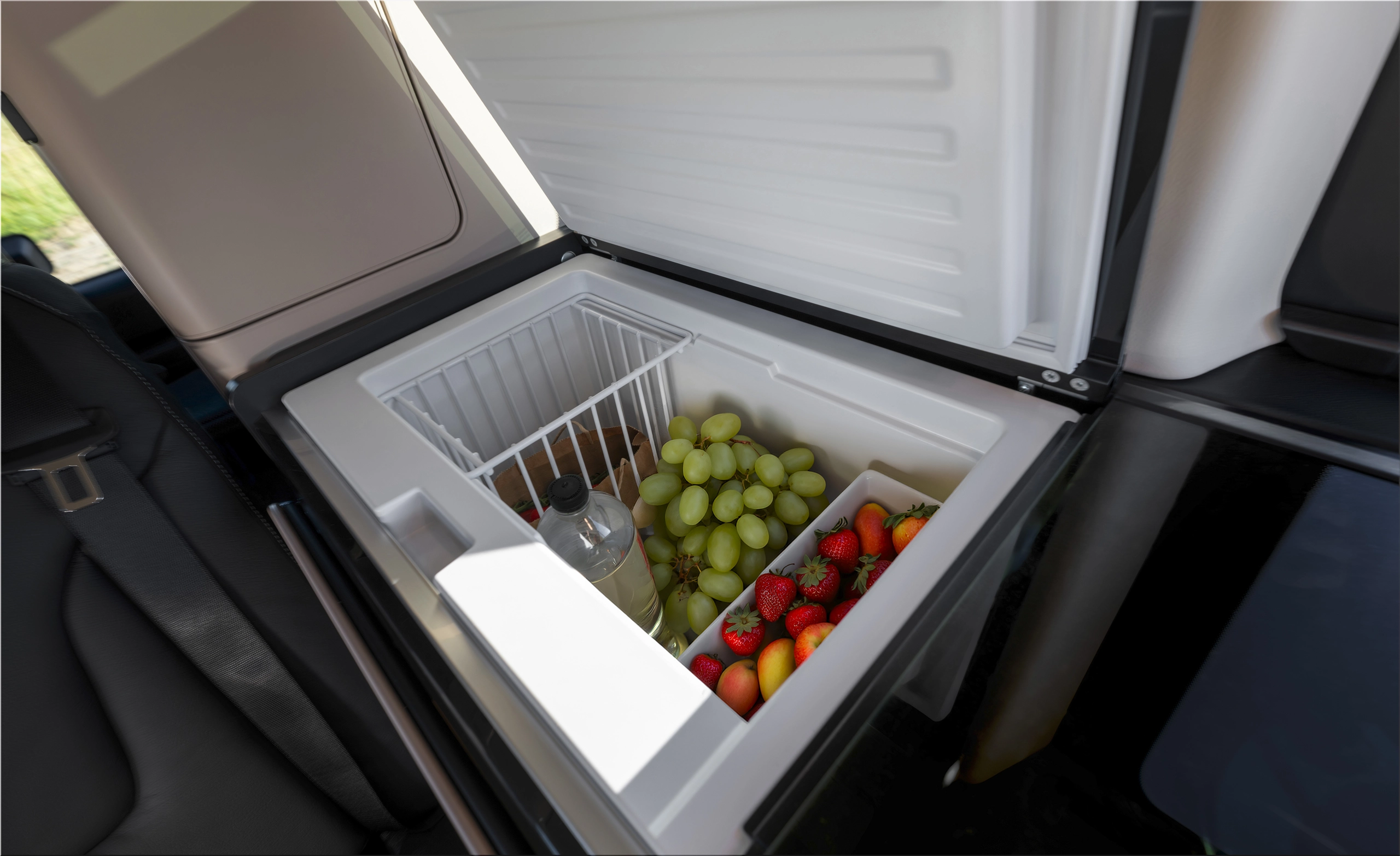
The integrated kitchen includes cooking, cooling, storage, water, and preparation facilities along the driver's side. This layout sacrifices some bed width compared with the Horizon, but it lets owners prepare meals without carrying loose kitchen modules.
Mercedes-Benz Advanced Control Runs the Living Space
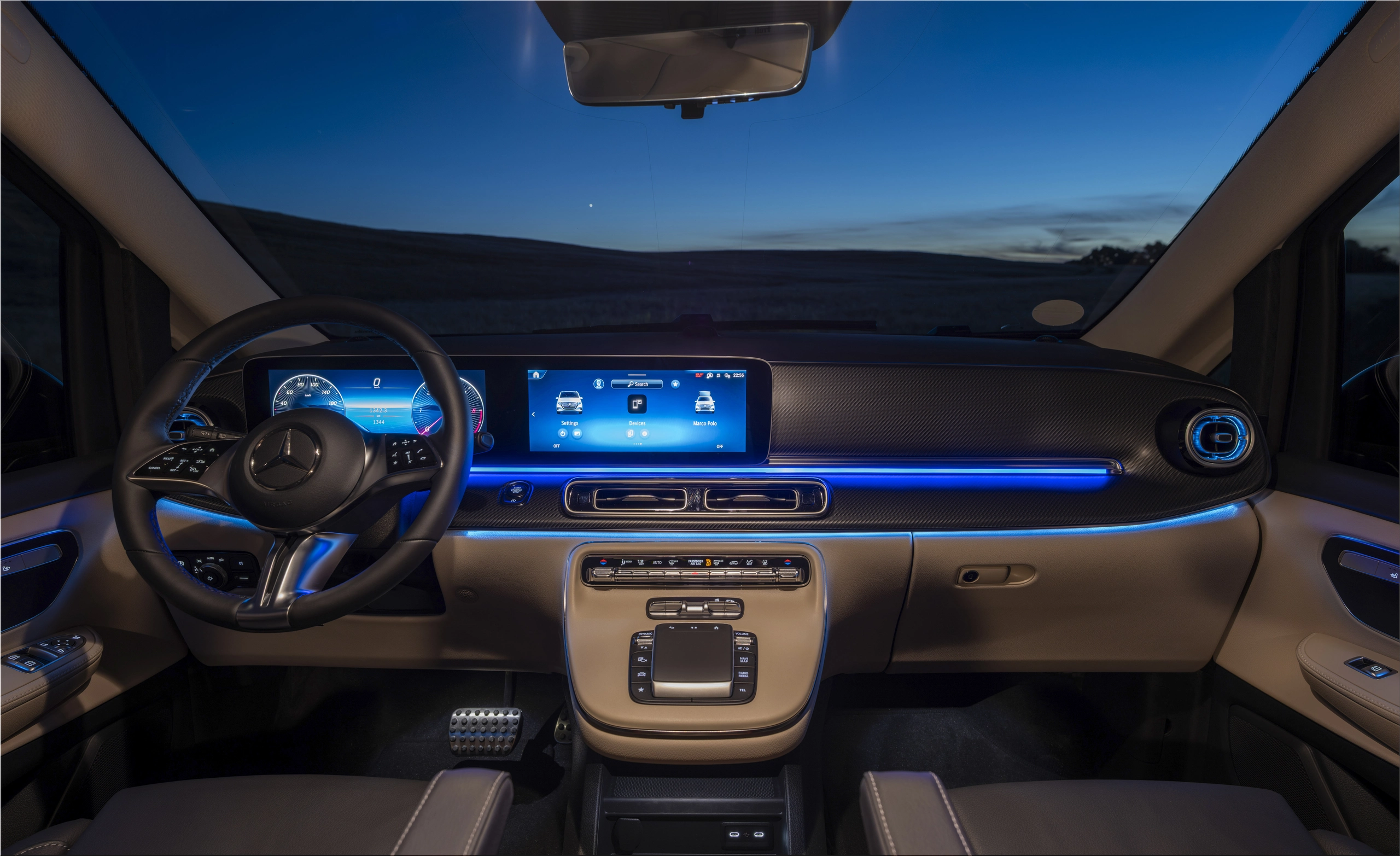
The Mercedes-Benz Advanced Control system, or MBAC, connects the vehicle and camper equipment through the dashboard display and a smartphone app. Owners can control the pop-up roof, roof window, lighting, auxiliary heating, sound system, and other living functions from one interface.
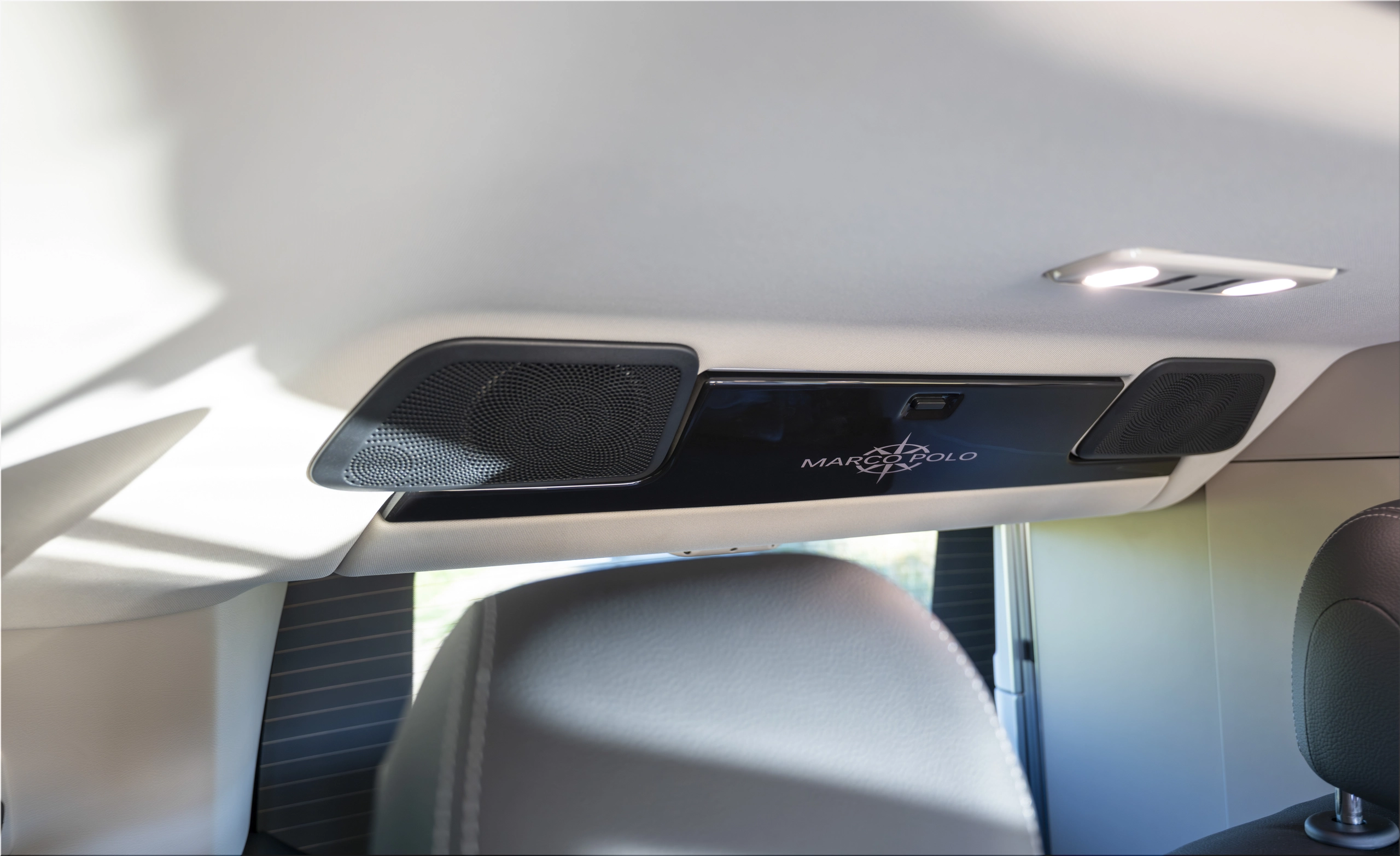
In addition, the new eight-speaker audio system includes a subwoofer and works while the ignition remains off. A camper-specific audio circuit matters because conventional vehicle entertainment systems often shut down to protect the starter battery.
The revised system also works with optional AIRMATIC air suspension. Drivers can level the body on uneven ground rather than moving the vehicle repeatedly or placing leveling blocks beneath the tires.
Consequently, the Marco Polo can provide a flatter sleeping surface with less setup work. A level vehicle also helps cooking equipment, drainage, and refrigerator operation.
Pro-Tip: Check the Parking Surface Before Activating Leveling
Park on the flattest available section first, apply the parking brake, and inspect the ground around all four tires. Use the AIRMATIC leveling function for minor corrections rather than trying to compensate for a steep slope or unstable soil.
A Removable Awning Makes Daily Use Easier
Mercedes-Benz redesigned the side awning so owners can remove it without tools. That sounds minor until the van enters a narrow parking structure or an automatic car wash.
Removing the cassette produces a cleaner MPV profile and reduces the risk of damaging an expensive camper component. It also supports the Marco Polo's two-role sales case: buyers can use it as a premium family vehicle during the week and reinstall its exterior camping equipment before a trip.
Other practical equipment includes:
- Swiveling front seats
- A movable rear bench
- Integrated storage cabinets
- Adjustable interior lighting
- Auxiliary cabin heating
- Window blackout solutions
- A powered pop-up roof
- Optional all-wheel drive
- AIRMATIC self-leveling capability
Marco Polo Versus Volkswagen California and Ford Nugget
The premium camper class gives buyers several strong choices. Volkswagen California focuses on packaging flexibility and offers diesel, gasoline, and plug-in hybrid powertrains. The Ford Transit Custom Nugget uses a distinctive rear-kitchen layout and typically carries a lower entry price.
| Camper van | Length | Height | Sleeps | Main advantage | Main limitation |
|---|---|---|---|---|---|
| Mercedes-Benz Marco Polo | 5,140 mm | 1,990 mm | 4 | Cabin quality, strong diesel output, MBAC controls | High purchase price |
| Volkswagen California | 5,173 mm | About 1,990 mm | 4 | Multiple powertrain choices and two sliding doors | Narrower living zones in some layouts |
| Ford Transit Custom Nugget | About 5,050 mm | About 2,000 mm | 4 | Separate rear kitchen and strong space efficiency | Less premium cabin finish |
By comparison, the Marco Polo places greater emphasis on road comfort and interior finish. Its rear-wheel-drive base also gives it different driving characteristics from front-driven rivals, while 4MATIC supports owners who travel in snow or use grass campsites.
Volkswagen counters with a plug-in hybrid option and dual sliding doors. Ford uses its rear kitchen to separate cooking from the central seating area, but that configuration can make rear access less convenient.
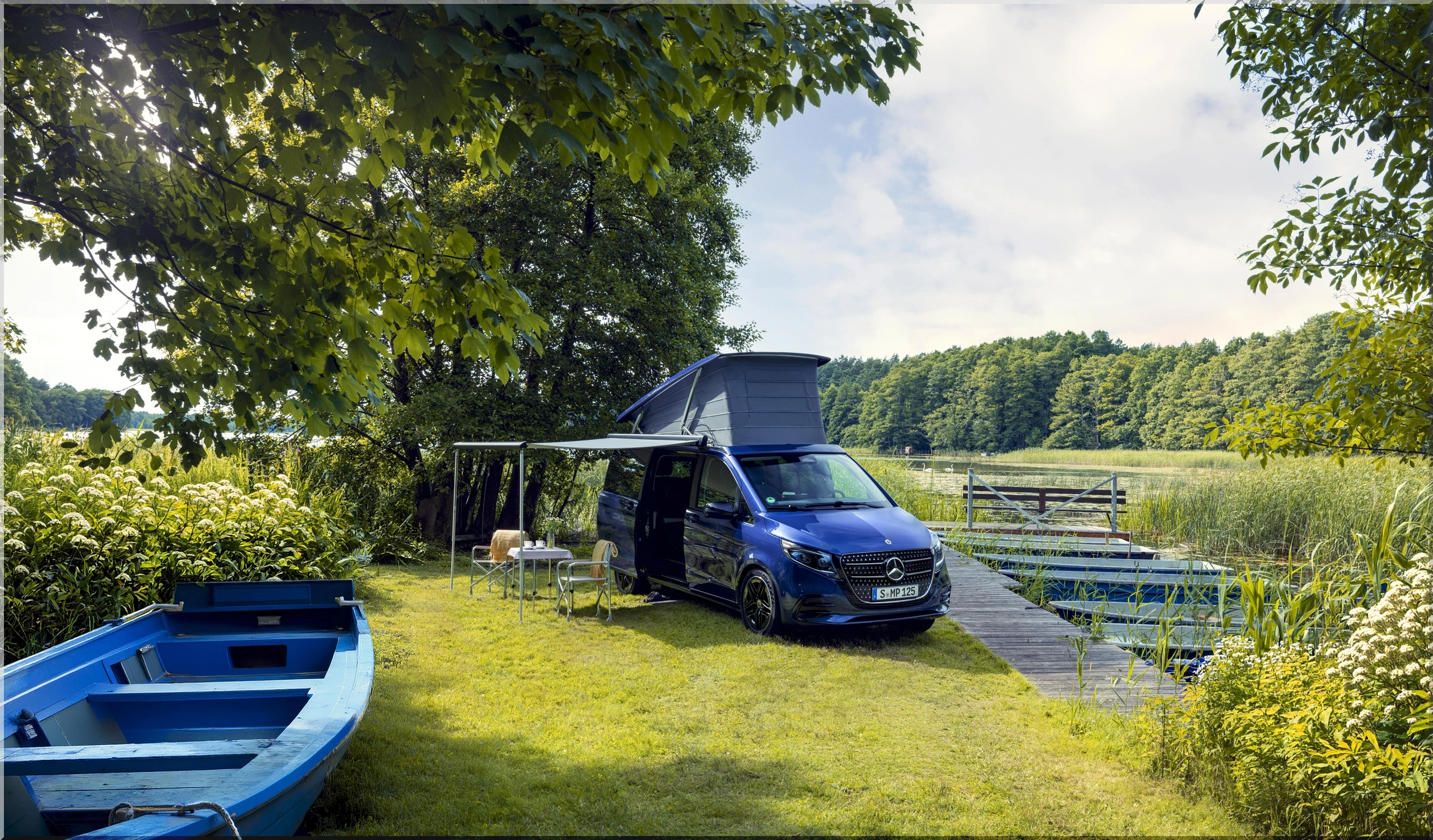
Marco Polo Horizon Trades the Kitchen for Seven Seats
The Marco Polo Horizon targets owners who need passenger capacity more often than a permanent kitchen. It provides seven seats, rotating front chairs, a convertible rear bench, and the same pop-up sleeping roof.
Removing the kitchen and side cabinets creates a wider lower sleeping area and greater cabin flexibility. Families can use the Horizon for school runs, group transport, sports equipment, and weekend camping without carrying a fixed kitchen on every trip.
The approximately $20,600 price gap between the Swedish starting prices also makes the decision clear. Buyers who regularly cook inside and camp for several nights can justify the full Marco Polo. Drivers who want occasional sleeping space and seven-seat utility may extract greater value from the Horizon.
Is the 2026 Mercedes-Benz Marco Polo Worth Its Price?
The answer depends on usage frequency. A buyer who already owns a daily vehicle and camps only twice per year will struggle to justify a starting price above $100,000. Hotel stays and short-term camper rentals will cost far less.
The financial case improves for owners who replace two vehicles with one. The Marco Polo can handle commuting, family transport, long-distance touring, and four-person camping while avoiding the storage costs and parking restrictions associated with a larger motorhome.
Specifically, its strongest assets include the sub-2-meter height, factory-integrated camper systems, four proper sleeping spaces, 237-hp engine option, and tool-free exterior hardware. The price remains its largest weakness, yet the 2026 updates address real ownership pain points rather than relying on decorative changes.
- Add new comment
- 39 views