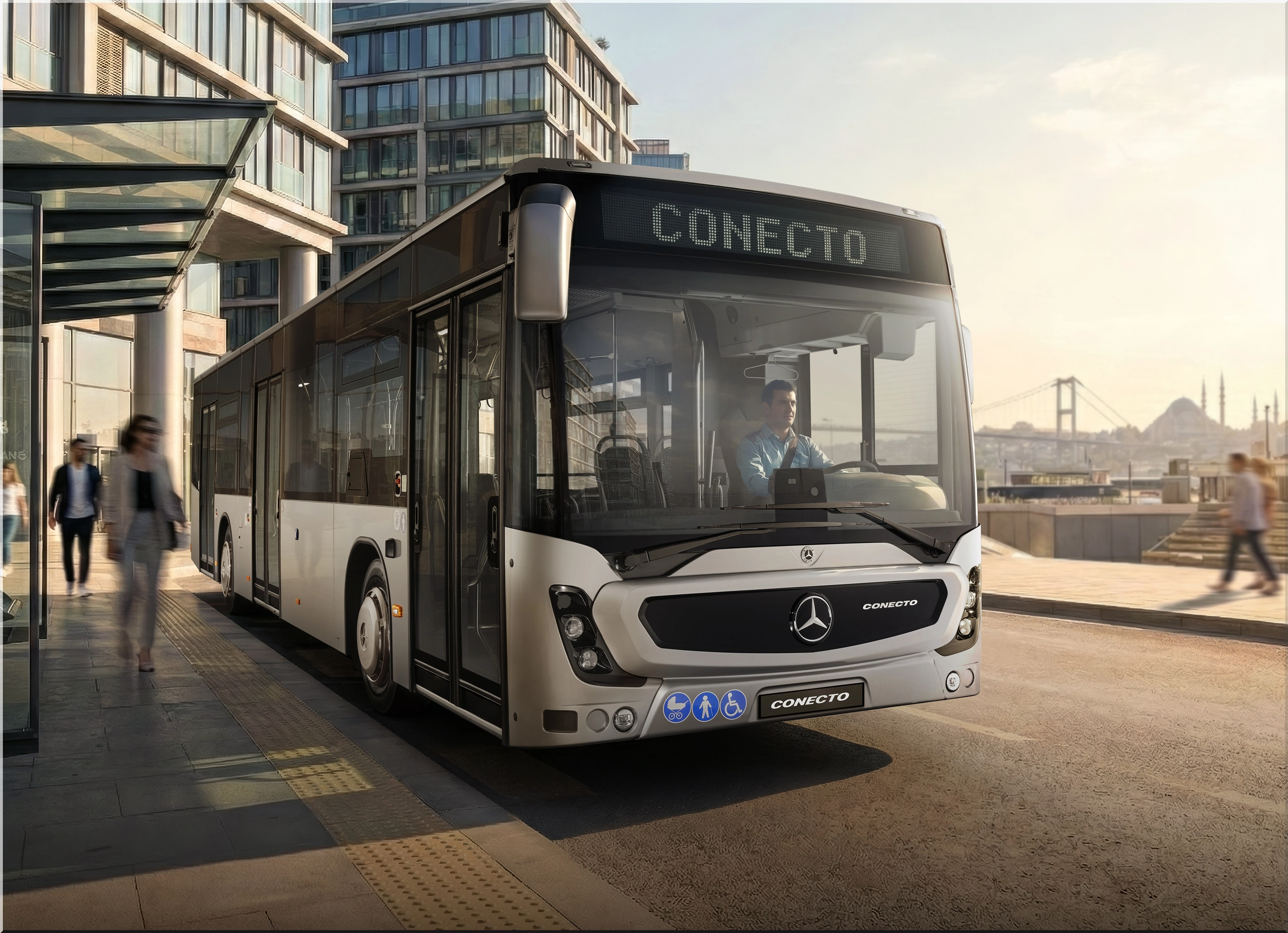
Daimler Buses has opened a new lane in Germany's city-bus market. The Mercedes-Benz Conecto now joins the local lineup as a lower-complexity, lower-cost alternative aimed at private operators that need proven hardware, fast capacity relief, and fewer configuration headaches.
That positioning matters. The Mercedes-Benz Citaro stays in place as the premium choice for heavily customized tenders and more demanding municipal specifications, while the Conecto steps in for school transport, reserve fleet duty, and straightforward urban routes. Looking at the data, Daimler Buses is not chasing novelty here. It is chasing volume, uptime, and a cleaner price-to-capability equation.
Why the Conecto matters in Germany
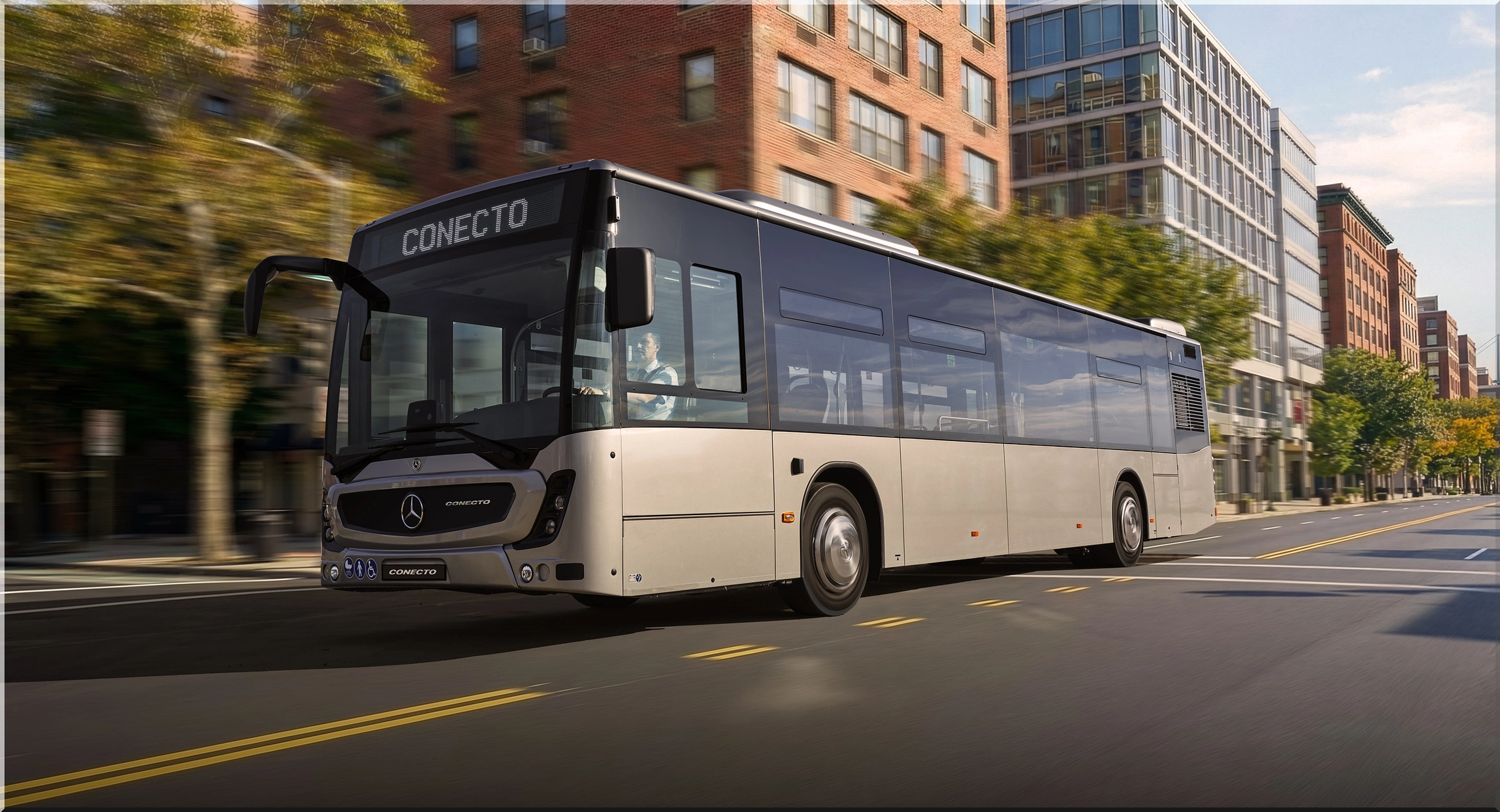
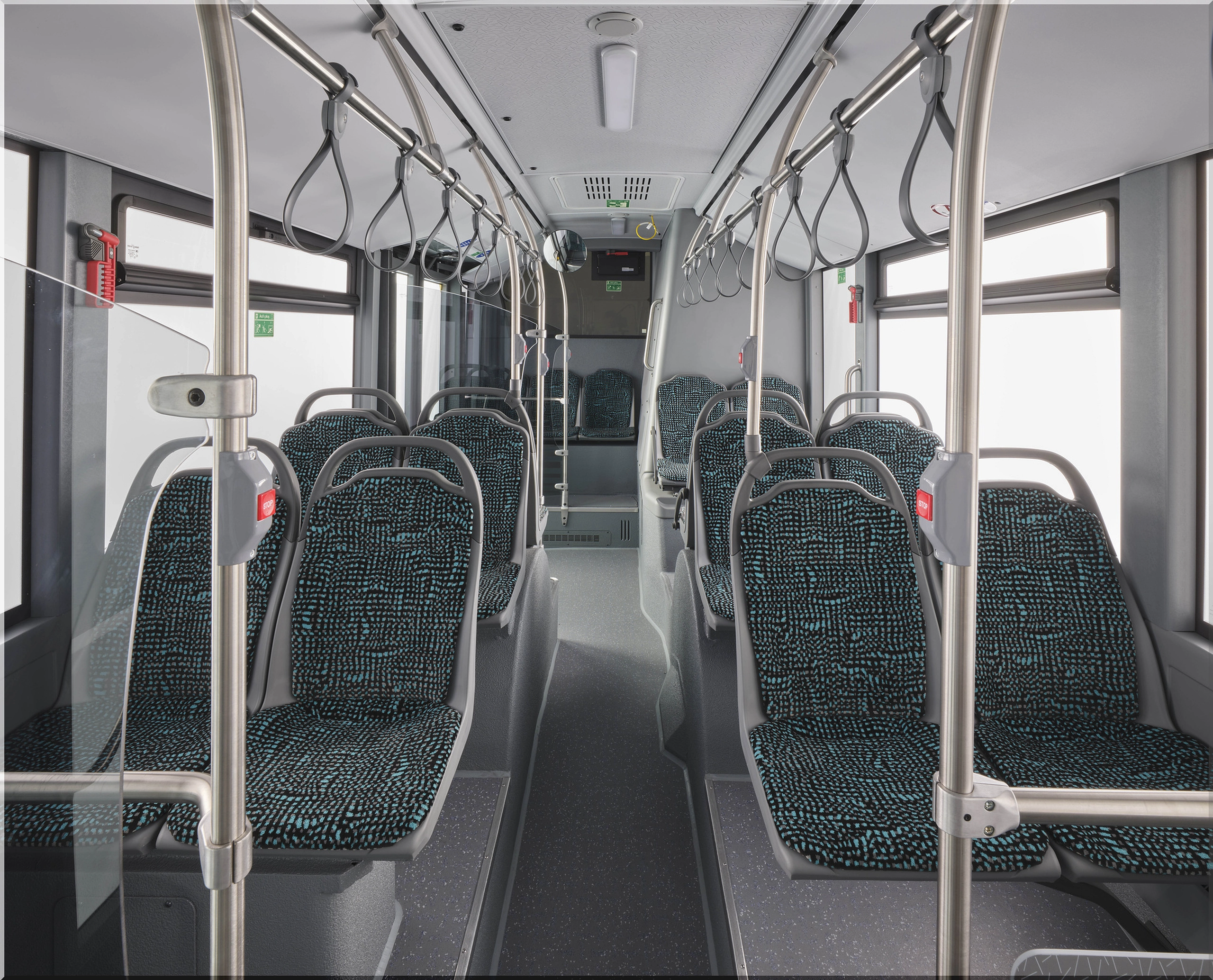
Germany already knows the Conecto name from other European markets, but this launch changes how Daimler Buses covers the domestic bus stack. Specifically, the Conecto gives operators a simpler bus with the Mercedes-Benz badge, access to the company's service network, and a familiar diesel-heavy technical package without the full customization scope of a Citaro.
That strategy has sharp logic behind it. Private operators often buy for route fit, maintenance predictability, and delivery timing before they buy for option-sheet depth. Consequently, a bus that trims complexity while keeping core Mercedes-Benz running gear can look very attractive when fleets need replacements fast.
Powertrain and platform logic
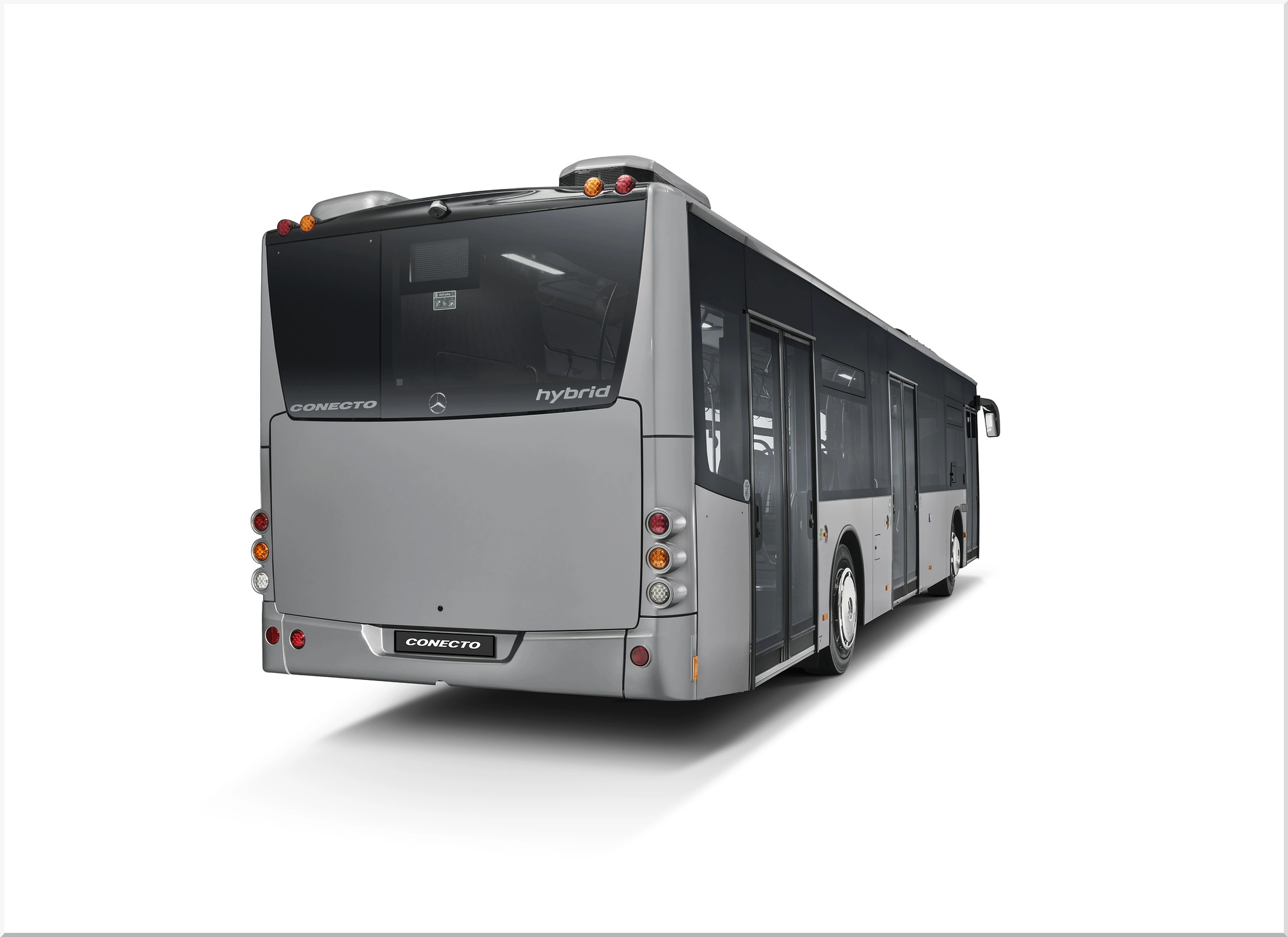
The solo Conecto uses the OM 936 7.7-liter inline-six, rated at 220 kW and 1,200 Nm. That equals 299 hp, and it lands right in the zone for a 12.13-meter low-floor city bus that has to survive repeated stop-start duty without dragging a larger engine around all day.
The Conecto G articulated version moves up to the OM 470 10.7-liter inline-six with 265 kW, 360 hp, and 1,700 Nm. By comparison, that bigger torque reserve suits the 18.12-meter platform's higher passenger loads, longer wheelbase split, and harsher launch demands from busy urban routes.
In addition, Daimler Buses offers the solo bus as a Conecto hybrid with 48-V low-voltage technology. That matters because mild-hybrid hardware trims fuel burn and supports launch assistance without forcing operators into a full battery-electric procurement cycle. From an expert perspective, that is a practical bridge product for fleets that still need diesel range, established workshop routines, and lower acquisition risk.
Mercedes-Benz Conecto dimensions and operating footprint
The 12-meter bus is actually 12,134 mm long, or about 477.7 inches. The articulated Conecto G stretches to 18,124 mm, or roughly 713.5 inches. Both buses measure 2,550 mm wide, which works out to 100.4 inches, and both stand 3,120 mm high with air conditioning fitted, or about 122.8 inches.
Those numbers tell an operational story. The standard Conecto keeps a 5,900 mm wheelbase between front and drive axle, while the Conecto G splits that into 5,900 mm from front to center axle and 5,990 mm from center to drive axle. That layout gives the articulated bus the length it needs without pushing it outside familiar depot and route planning standards.
Core dimensions and capacity
| Spec | Conecto | Conecto G |
|---|---|---|
| Length | 12,134 mm / 477.7 in | 18,124 mm / 713.5 in |
| Width | 2,550 mm / 100.4 in | 2,550 mm / 100.4 in |
| Height with A/C | 3,120 mm / 122.8 in | 3,120 mm / 122.8 in |
| Turning circle | 21,542 mm / 70.7 ft | 22,878 mm / 75.1 ft |
| Standard seats | 26 | 40 |
| Max passenger capacity | 101 | 150 |
| Doors | 3 | 4 |
| Gross vehicle weight | 19,500 kg | 28,000 kg |
What fleet buyers should watch
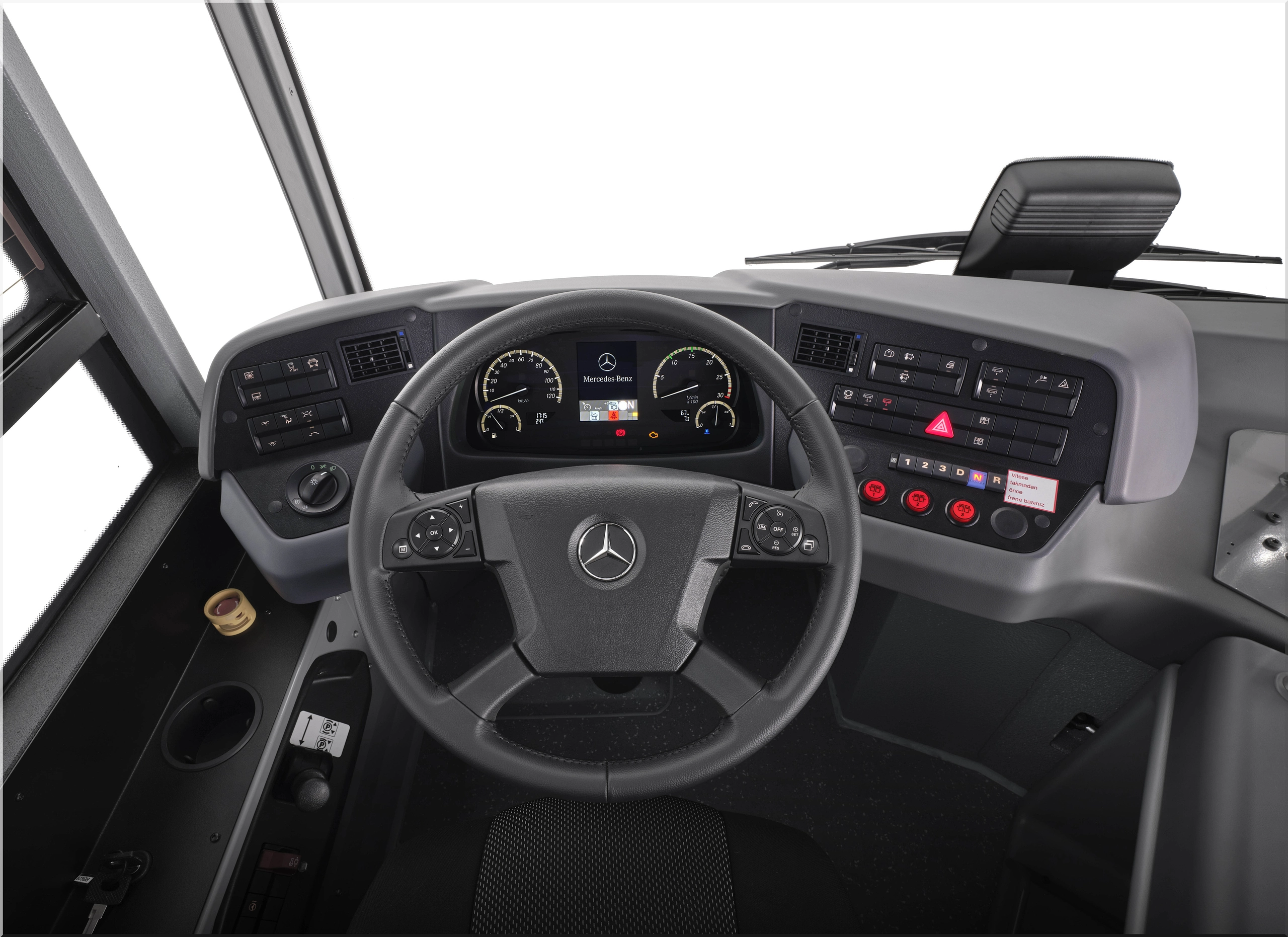
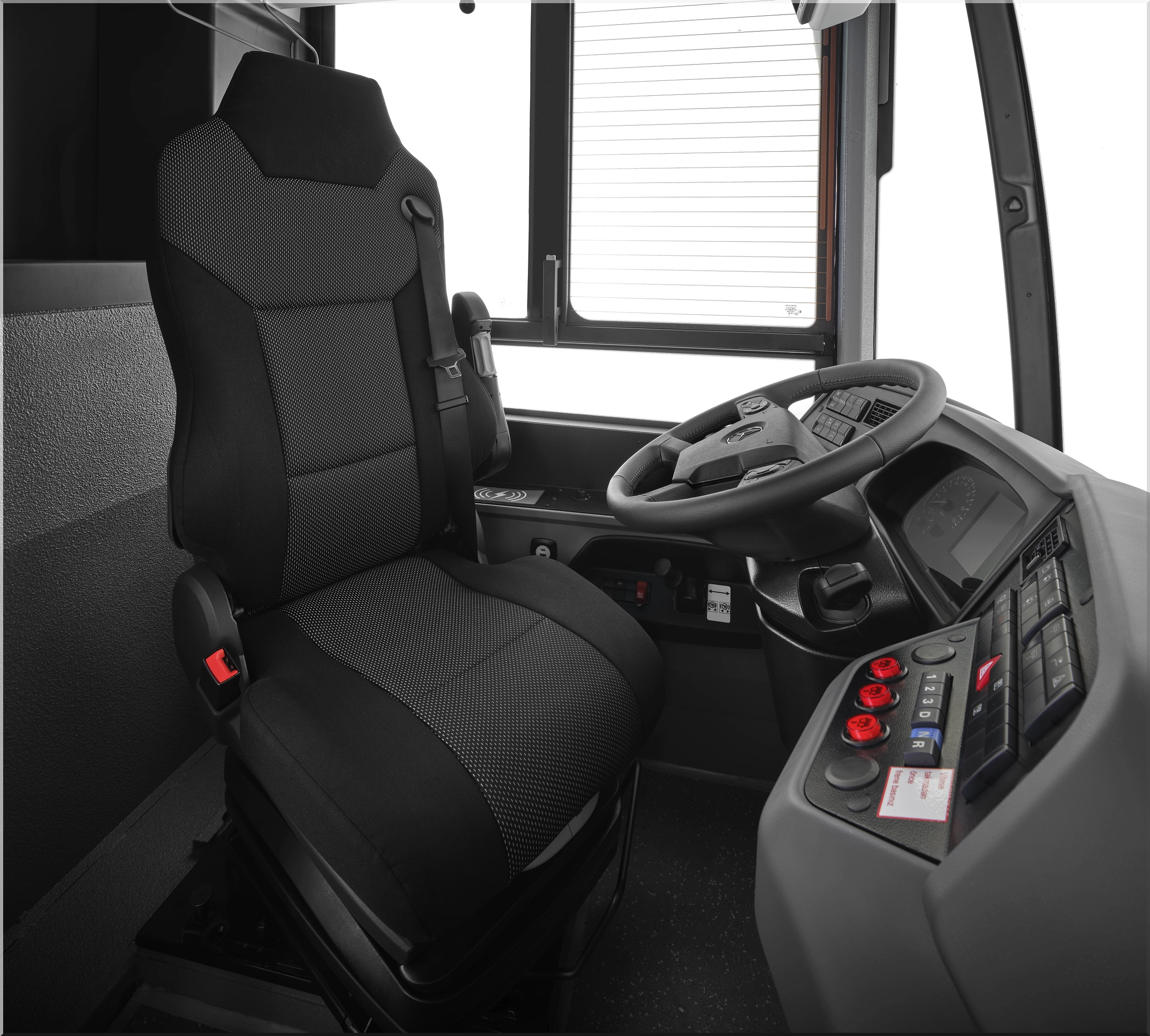
The Conecto is built for function, not showmanship. Both versions use pneumatic disc brakes on all axles, EBS, ABS, an automatic bus stop brake with pull-away lock, and kneeling capability. That gives operators the safety and accessibility basics expected in modern urban service.
Looking at the data, Daimler Buses also kept several worthwhile assistance systems in play:
- Sideguard Assist 2
- Traffic Sign Assist
- Frontguard Assist
- Attention Assist
- Reversing camera
- Tyre Pressure Monitoring
That mix tells you where Daimler Buses drew the line. It preserved the systems that reduce low-speed incidents, protect pedestrians and cyclists, and support day-to-day fleet management. It left the bus away from a full premium-tech overload, which helps keep the Conecto in its intended price band.

Engine, chassis, and service-minded hardware
| Category | Conecto | Conecto G |
|---|---|---|
| Engine | OM 936 | OM 470 |
| Displacement | 7.7 L | 10.7 L |
| Output | 220 kW / 299 hp | 265 kW / 360 hp |
| Torque | 1,200 Nm | 1,700 Nm |
| Emissions standard | Euro 6 E | Euro 6 E |
| Hybrid option | Yes, 48-V | No |
| Transmission options | Voith DIWA / ZF EcoLife 2 | Voith DIWA / ZF EcoLife 2 |
| Fuel tank | 250 L | 250 L |
| AdBlue tank | 32 L | 32 L |
Production, timing, and the business case
Daimler Buses will build the Conecto through its cooperation with Otokar, with Daimler supplying the key vehicle components and production equipment while supporting manufacturing on site. That is a supply-chain play as much as a product move. Daimler gains extra capacity without forcing every German-bound bus through the same production path as higher-content models.
Deliveries for Germany are scheduled to start in mid-2027. That gives fleet planners time to map replacement cycles, depot compatibility, and route demand before the first units arrive.
Pro-Tips for operators
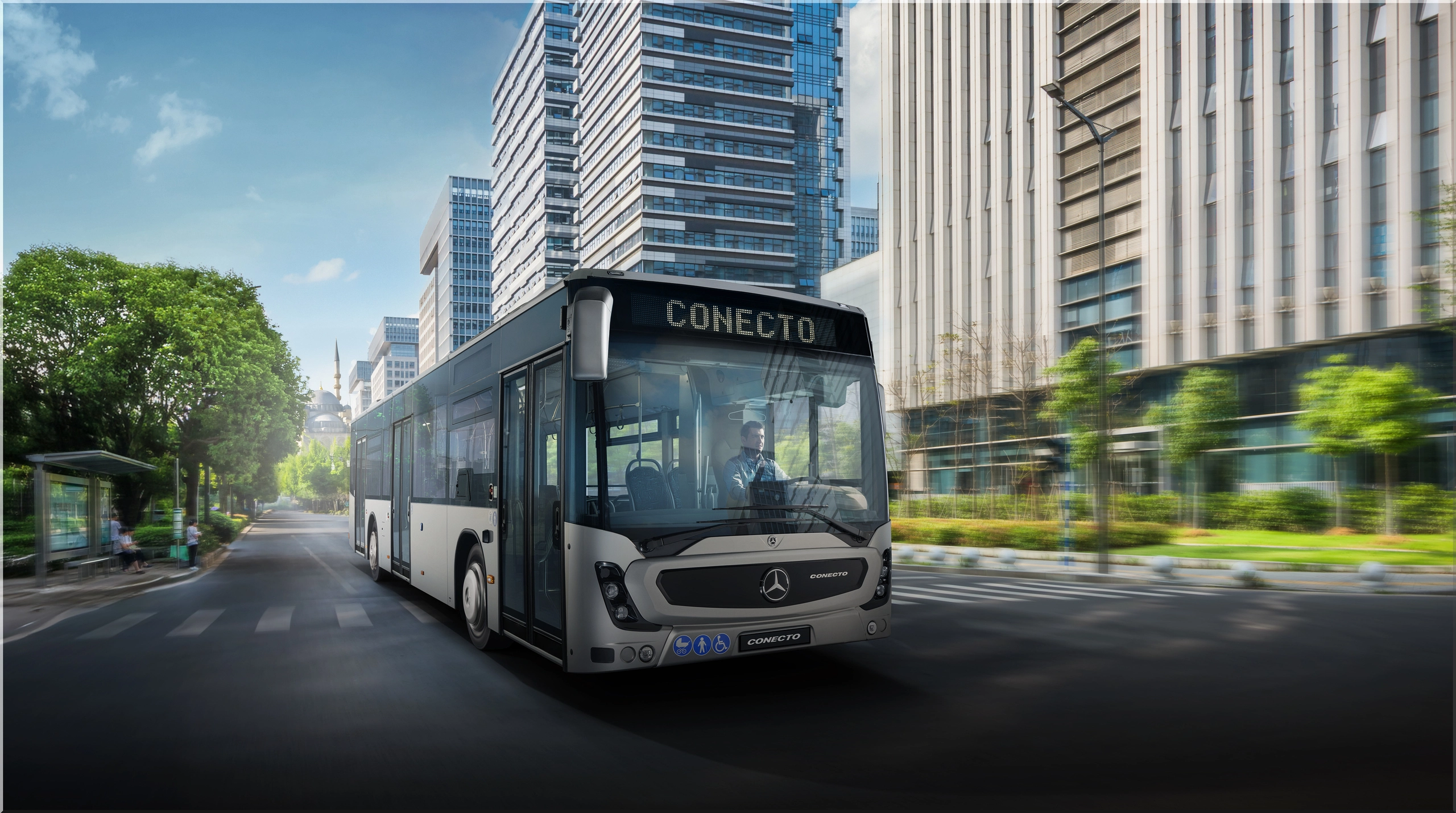
- Put the 12.13 m Conecto hybrid on routes with frequent stops and lower average speeds, where low-voltage hybrid support can trim fuel use.
- Put the 18.12 m Conecto G on corridors where load spikes hit hard and torque reserve matters more than trim-level flexibility.
- Keep the Citaro on tenders that need deep customization, then use the Conecto for reserve, school, and standard urban duty.
What now for German bus operators?
Start with the route map. If your network needs a premium-spec city bus with heavy tailoring, stick with Citaro. If you need dependable Mercedes-Benz city bus hardware, lower spec complexity, and a more direct path to fleet capacity, the Conecto has a strong case.
That is the real story here. Daimler Buses did not launch the Conecto in Germany to replace the flagship. It launched it to fill the gap between premium product strategy and real-world procurement pressure.
- Add new comment
- 20 views