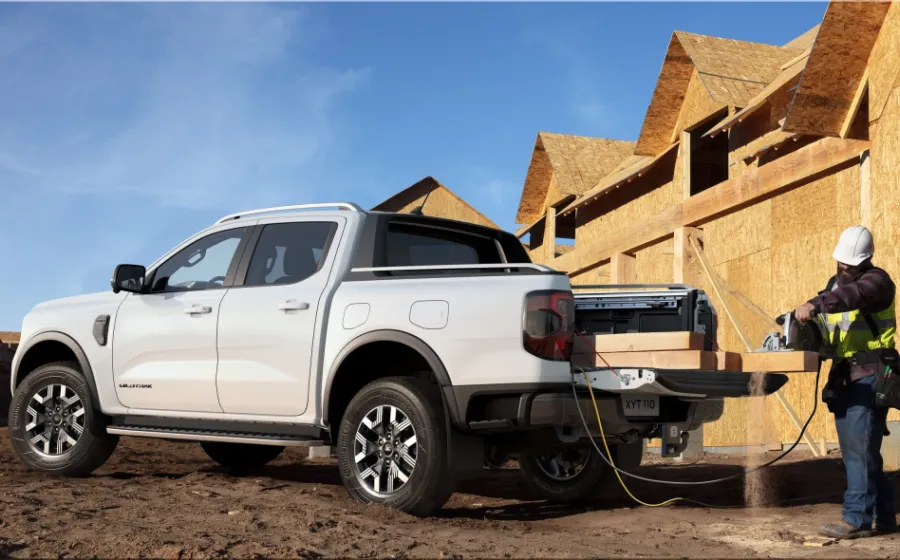
Ford has pointed the Ford Ranger Super Duty Europe program at operators who already know the normal pickup ceiling. This truck targets military users, emergency services, forestry fleets, mining teams, infrastructure crews, and rescue operators that need a smaller footprint than an F-Series truck but far more muscle than a conventional midsize pickup.
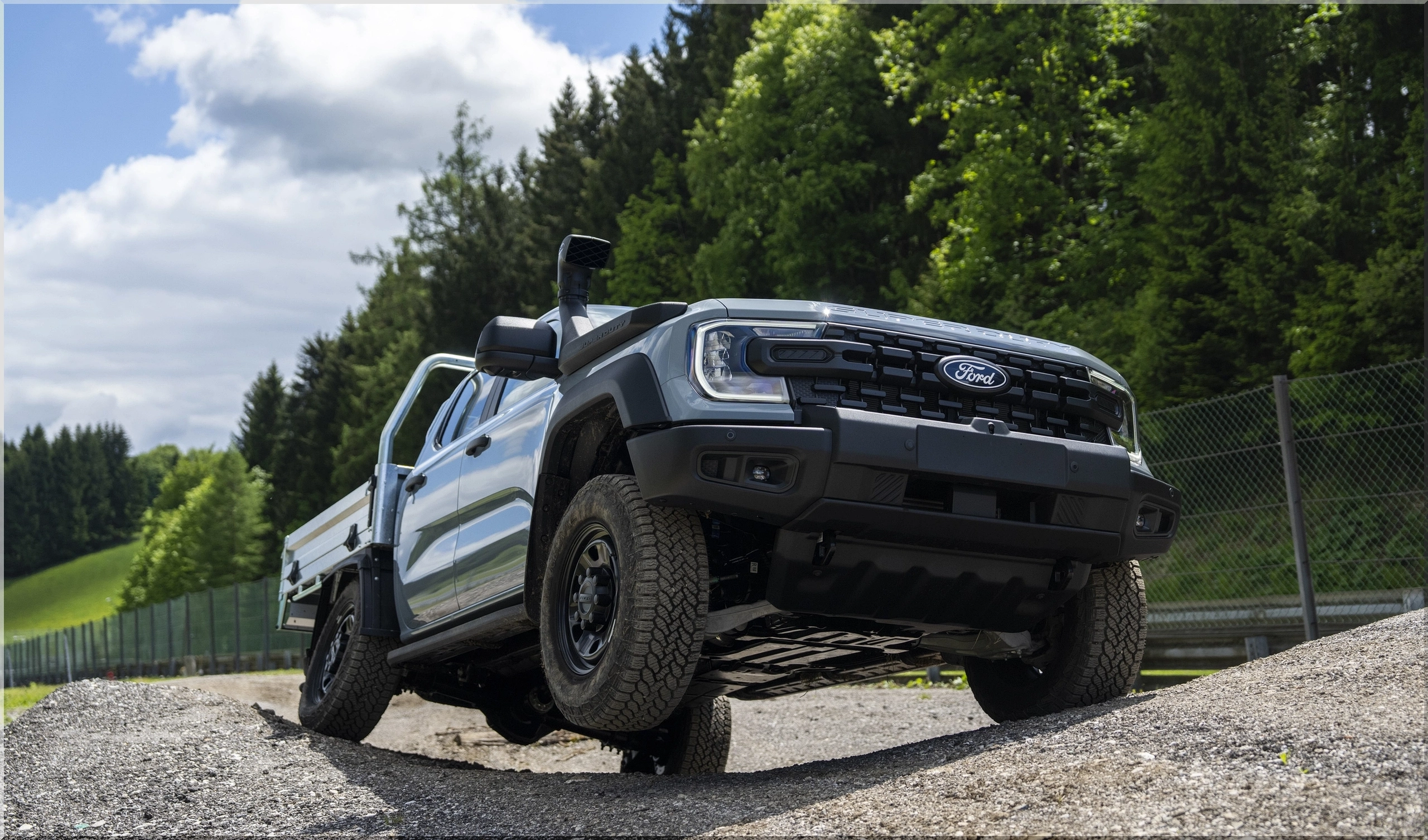
The numbers set the tone. Ford lists up to 1,982 kg of payload, 4,500 kg of braked towing capacity, and 8,000 kg gross combination mass. That equals roughly 4,370 lb of payload, 9,921 lb of towing, and 17,637 lb combined vehicle-and-trailer mass. That puts the Ranger Super Duty in a rare space: a Europe-focused midsize truck with commercial-grade mass ratings, serious off-road geometry, and conversion-ready hardware.
Ford Ranger Super Duty Europe: Why Ford Built It
Ford already owns a commanding position in Europe's pickup segment. Ranger has led the European pickup market for 11 straight years, and Ford says it held more than 47 percent share in 2025. The Ranger Super Duty extends that lead into a smaller, higher-margin fleet niche that consumer pickups rarely serve.
In addition, Europe does not buy heavy pickups the way North America does. Tight streets, narrower rural tracks, city access rules, vehicle taxes, and parking limits punish full-size trucks. A heavy-duty Ranger answers a practical question: how much towing, payload, and off-road resilience can Ford package into a midsize body envelope?
Heavy-Duty Ratings That Change the Ranger's Job Description
The standard Ford Ranger already works hard in Europe, but the Ford Ranger Super Duty moves into a higher mass class. Ford describes the European version as an N2 truck, not a normal private-use pickup. The model does not enter the market first with ordinary European type approval for standard road use.
Consequently, converters and specialist operators need the correct approvals for each use case. Emergency services, defense contractors, mining companies, forestry users, and infrastructure fleets already work with approval routes and body builders.
| Capability | Ford Ranger Super Duty Europe | U.S. Conversion | Why It Matters |
|---|---|---|---|
| Maximum payload | 1,982 kg | 4,370 lb | Carries tools, crew gear, service bodies, or mission equipment |
| Braked towing | 4,500 kg | 9,921 lb | Pulls plant trailers, rescue trailers, generators, and equipment |
| Gross combination mass | 8,000 kg | 17,637 lb | Allows heavy towing while carrying load in the bed |
| Ground clearance | 299 mm | 11.8 in | Adds space under axles, skid plates, and driveline hardware |
| Wading depth | 850 mm | 33.5 in | Supports river crossings, flooded tracks, and remote response work |
| Fuel tank | 130 liters | 34.3 U.S. gal | Extends operating range in remote areas |
By comparison, the top current Ranger variants in Europe trail the Super Duty by nearly a full tonne in payload and one tonne in towing. That changes daily fleet math. A truck that can tow a heavy trailer and still carry meaningful bed load can reduce the need for a larger support vehicle on some jobs.
3.0-Liter V6 Diesel: Torque Over Theater
Ford uses a 3.0-liter V6 turbodiesel in the Ranger Super Duty, tuned at 154 kW at 3,250 rpm and 600 Nm at 1,750 rpm. That equals about 209 metric horsepower and 443 lb-ft of torque. The output looks conservative beside performance pickups, but fleet buyers care less about bragging rights and more about heat control, driveline durability, and torque delivery under load.
Looking at the data, Ford aimed this engine tune at repeatable work, not sprint times. The V6 runs with a 10-speed automatic transmission and full-time four-wheel drive. Ford also pairs it with a reinforced transfer case, low-range gearing influenced by F-Series Super Duty hardware, and a cooling package said to improve capacity by 25 percent over a regular Ranger.
From an expert perspective, that cooling upgrade deserves attention. Heavy towing punishes the cooling stack during long climbs, soft-surface hauling, high ambient heat, and low-speed work where airflow drops. More cooling capacity gives the diesel and transmission a larger thermal buffer.
Definition: GVM, GCM, And Payload
GVM means gross vehicle mass: the maximum permitted weight of the truck with occupants, fuel, accessories, cargo, and trailer ball download.
GCM means gross combination mass: the maximum permitted combined weight of the truck and trailer.
Payload covers everything added after base kerb weight: people, tools, cargo, trays, canopies, auxiliary gear, communications equipment, and trailer ball download.
Pro-Tip: Do not read payload and towing as two separate wins. At 4,500 kg towing, ball download eats into payload, so operators should weigh the truck before and after upfitting, then weigh the full trailer combination.
Chassis, Axles, Wheels, And Tires
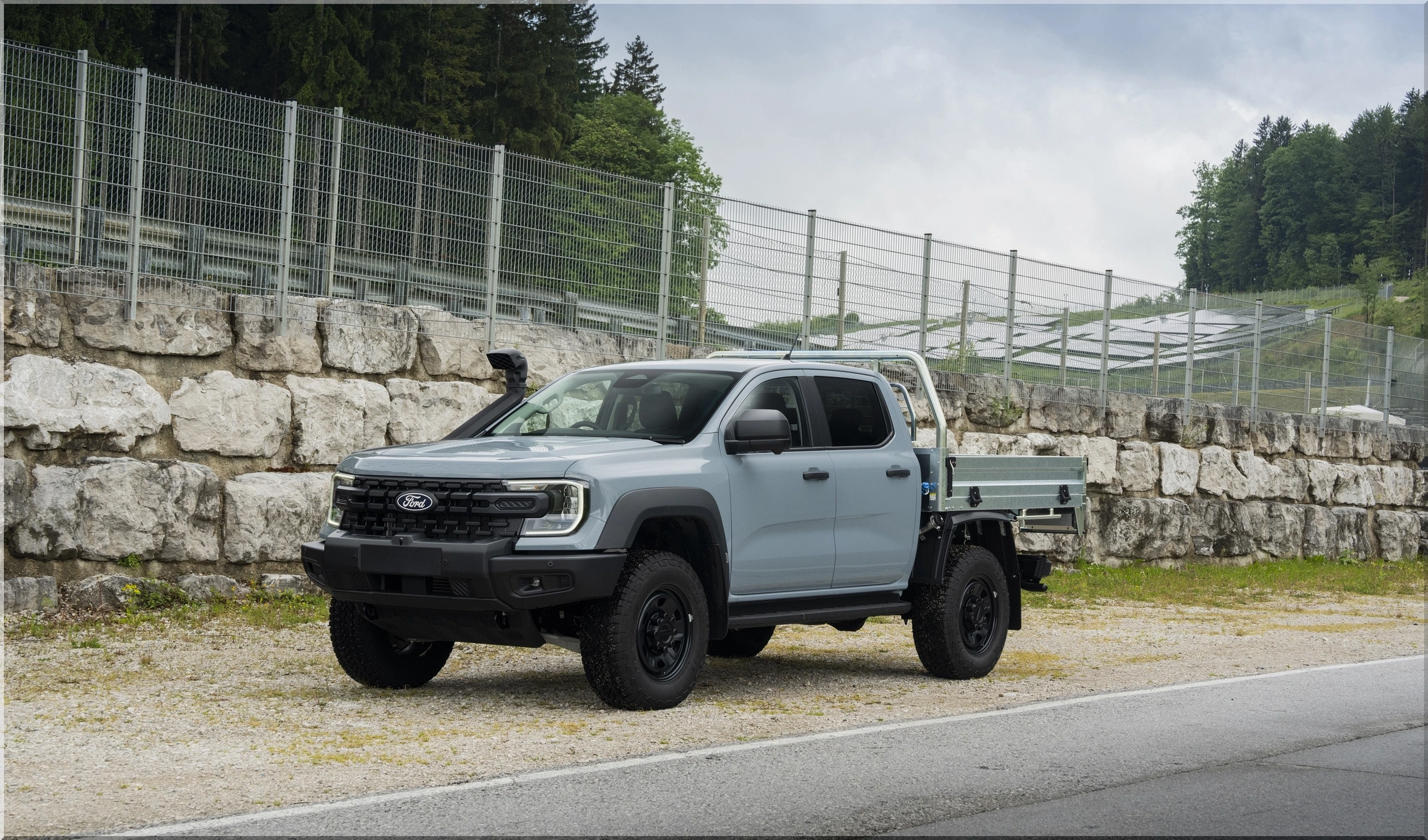
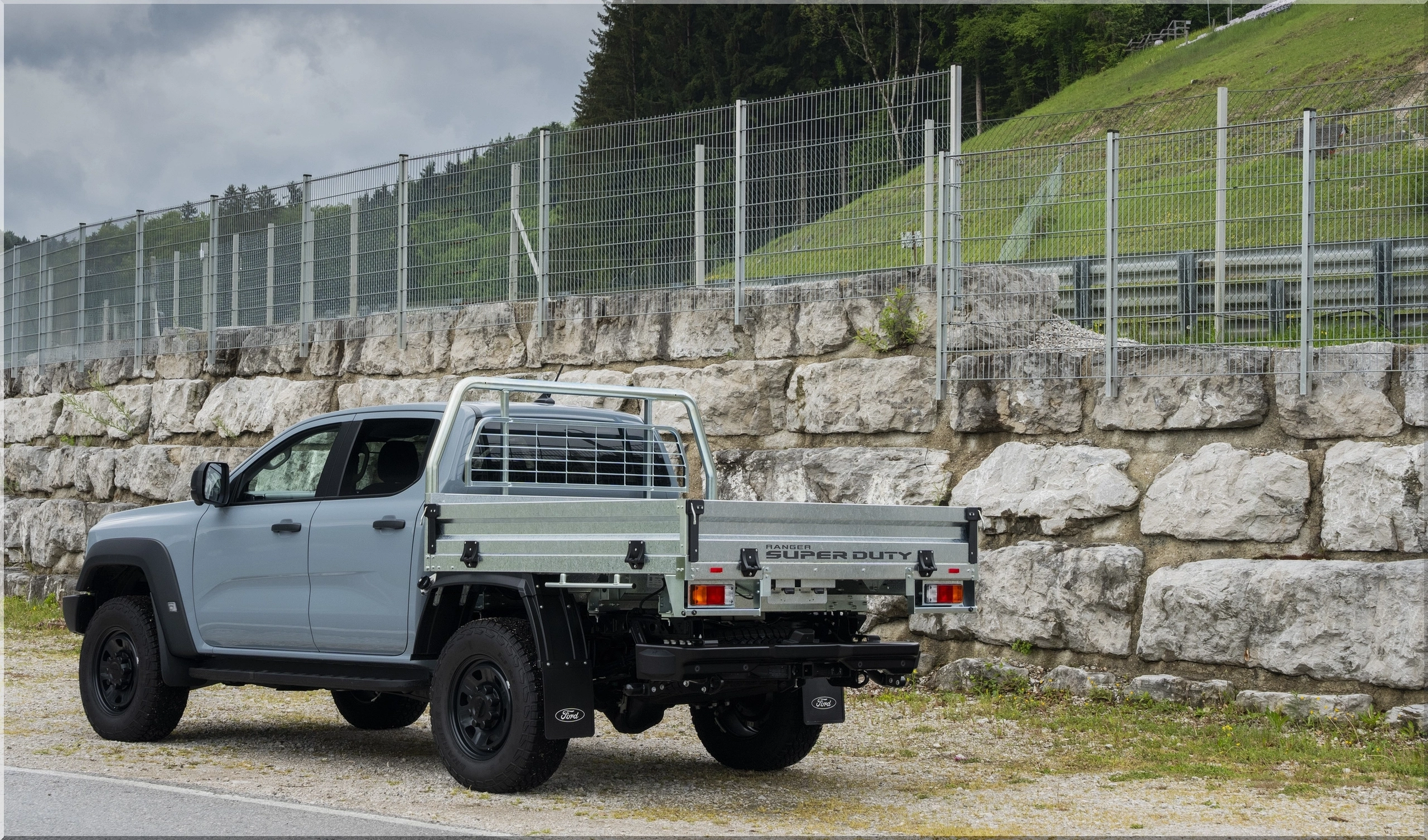
Ford did not stretch the Ranger's exterior footprint for Europe, according to its launch material. Instead, engineers strengthened the frame, suspension brackets, tow bar, axle hardware, and load paths. That keeps the truck midsize while giving it a stronger skeleton for heavy bodies and trailers.
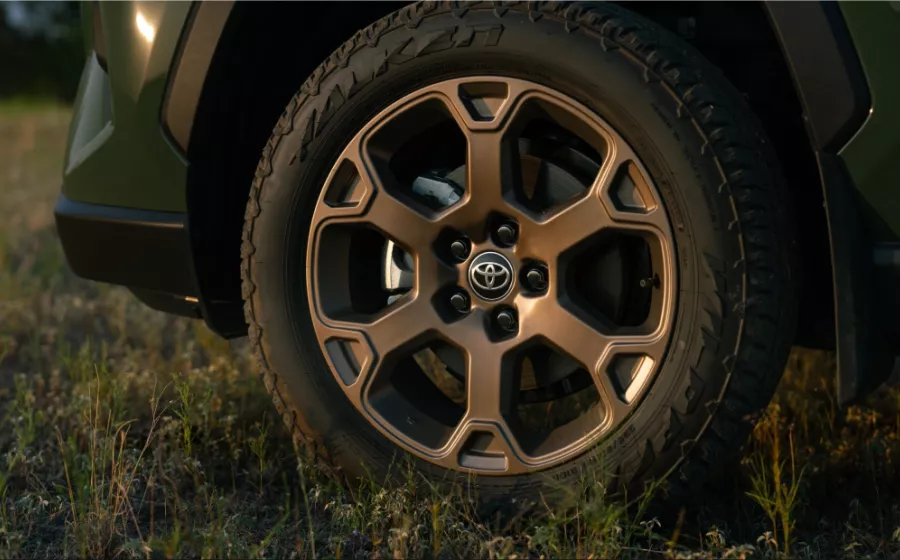
The rear axle ranks as the largest and strongest ever fitted to a Ranger. Ford also fits eight-stud wheel hubs, larger wheel bolts, and built-in torque indicators. The tire package uses 18-inch steel wheels with LT 275/70 R18 General Grabber all-terrain tires, roughly 33.2 inches in overall diameter.
| Hardware Area | Super Duty Upgrade | Operational Logic |
|---|---|---|
| Frame and brackets | Reinforced structure and mounting points | Supports converters, heavy bodies, and repeated high-load cycles |
| Rear axle | Largest Ranger rear axle to date | Manages payload, trailer loads, and uneven ground loads |
| Wheel hubs | Eight-stud pattern with larger bolts | Adds clamping strength and faster visual torque checks |
| Tires | LT 275/70 R18 all-terrain | Balances load rating, grip, and serviceability |
| Underbody | High-strength steel protection | Shields engine, front differential, transfer case, transmission, and fuel tank |
| Air intake | Sealed factory snorkel | Feeds cleaner air in dust, sand, and deep water |
Off-Road Geometry Built For Loaded Work
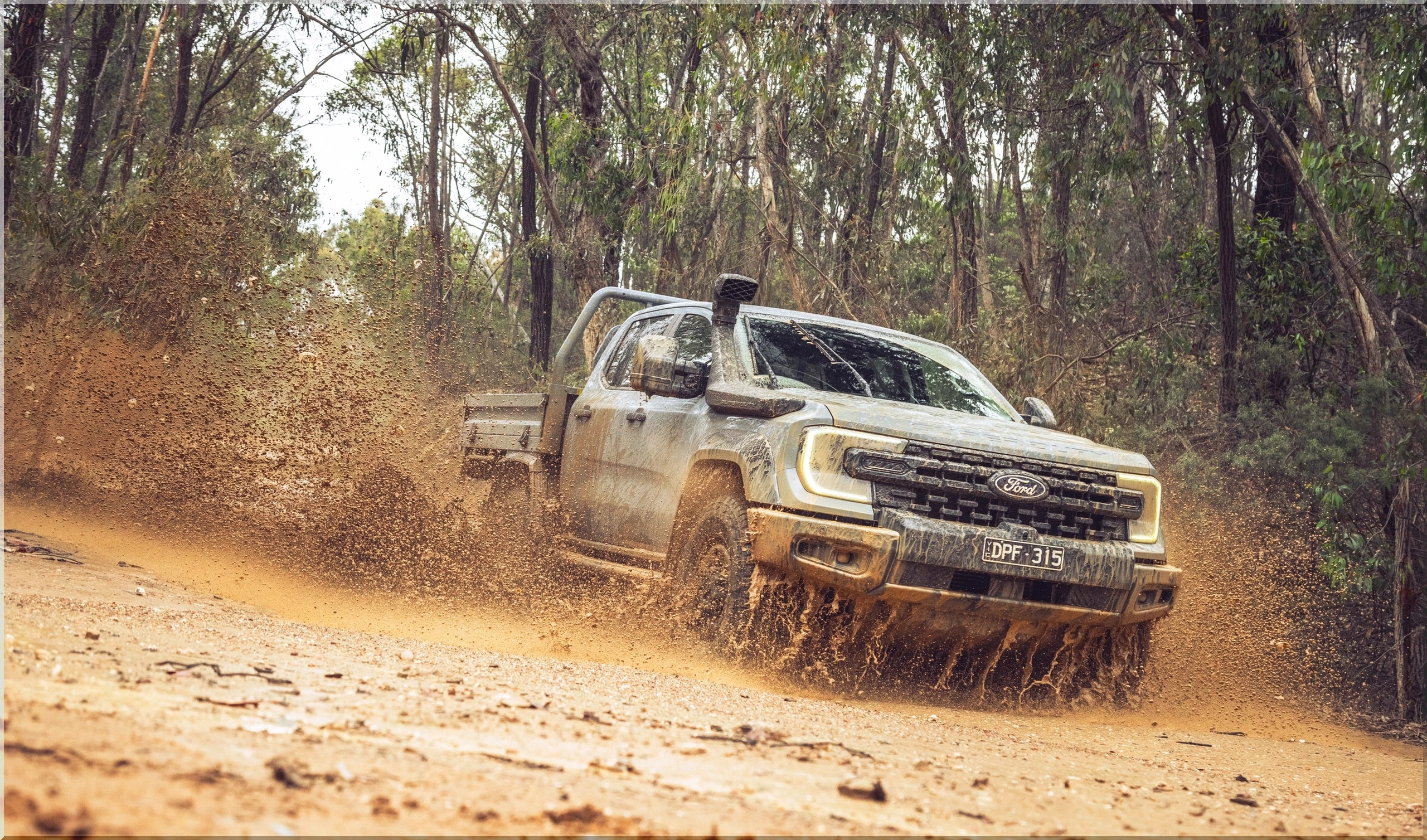
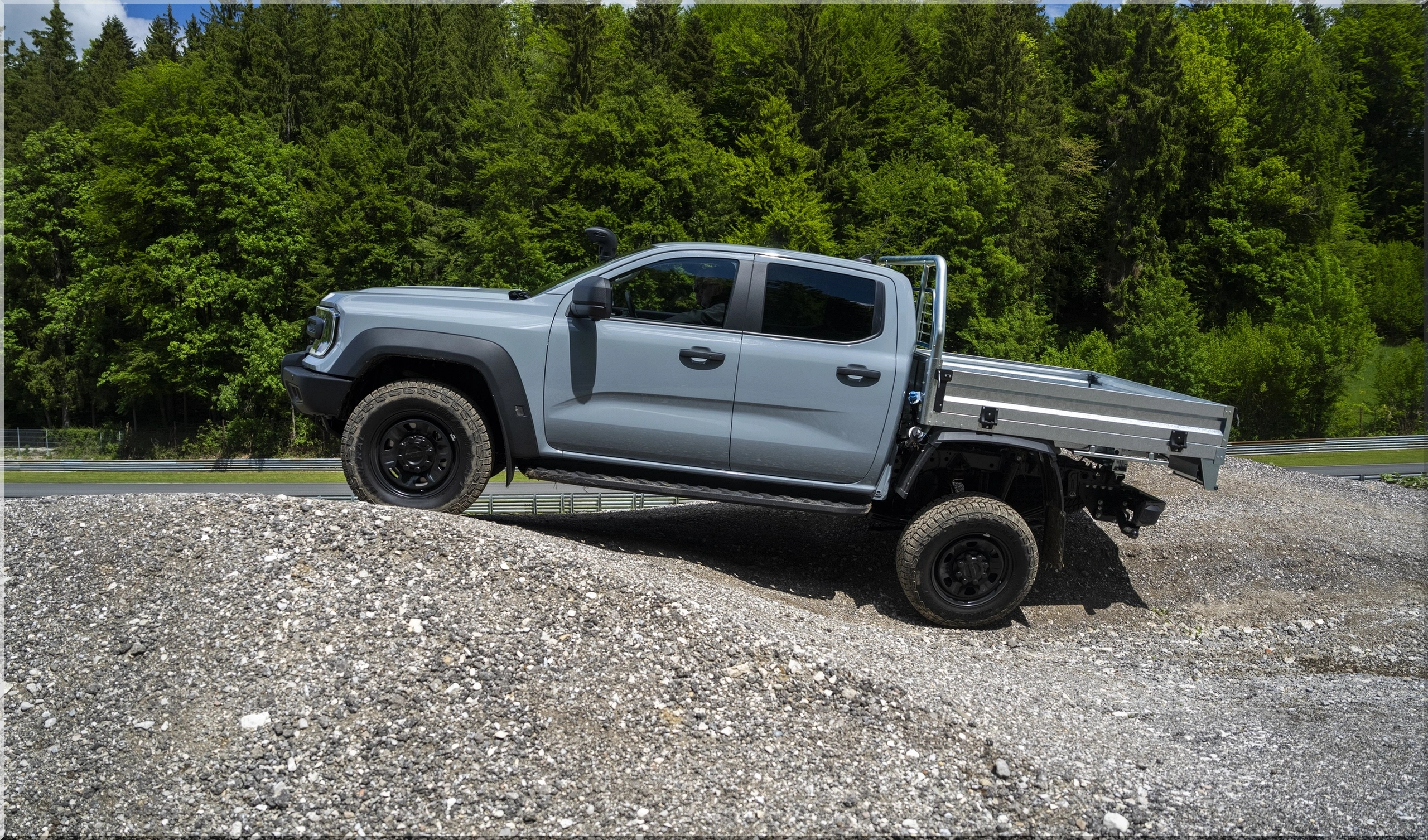
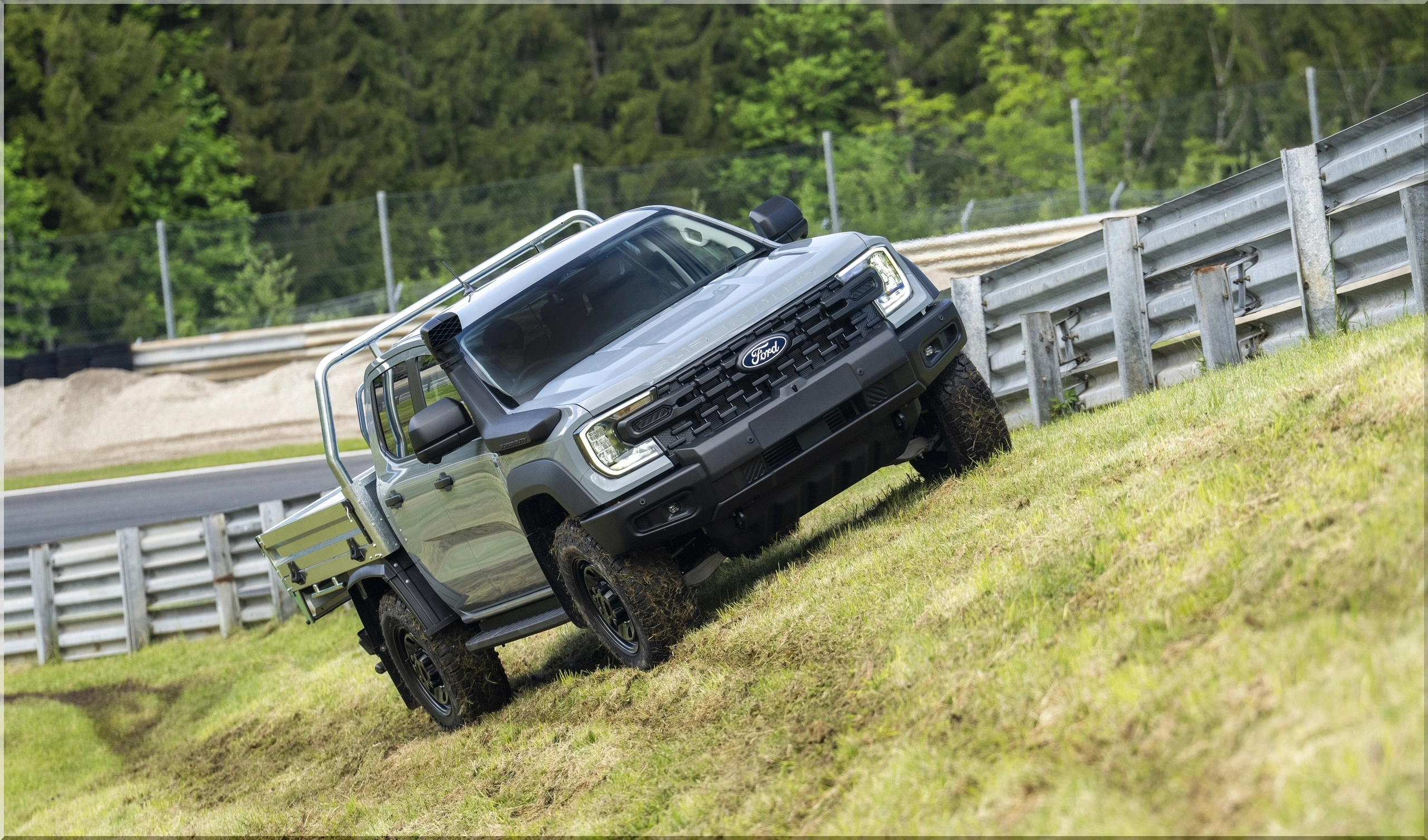
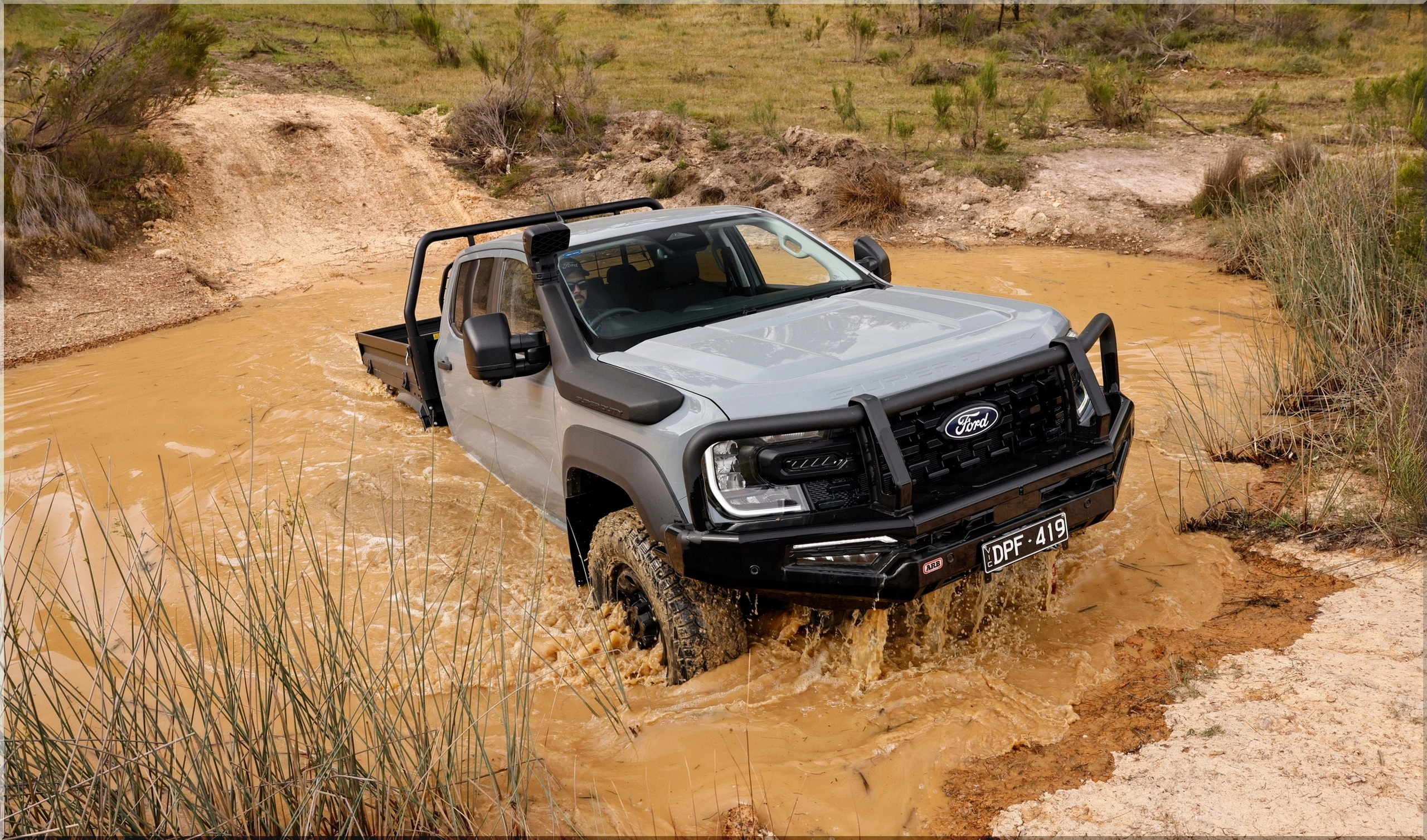
The Ford Ranger Super Duty Europe package gives operators up to 299 mm of ground clearance, a 36-degree approach angle, a 29-degree departure angle, and a 26-degree breakover angle without load. The 850 mm wading depth matches the kind of figure buyers usually associate with recreational off-road halo trucks, but here it serves utility fleets.
In addition, Ford places several breathers high to reduce water entry risk. The sealed snorkel helps the engine draw cleaner air in dust, sand, and water crossings. High-strength steel underbody protection covers the engine, front differential, transfer case, gearbox, and fuel tank, so the truck can slide, scrape, and crawl over rough surfaces with lower damage risk.
Selectable drive modes include Normal, Eco, Tow/Haul, Slippery, Mud/Ruts, Sand, and Rock Crawl in global specification. Ford's European release lists six modes, so final market content may vary. The core point stays clear: Ford tuned the control systems for towing, loose surfaces, low-speed traction, and slow technical work.
Locking Differentials, Cabin Tech, And Upfitter Controls
Ford fits front and rear electronic locking differentials, a feature set that matters when a loaded truck starts lifting wheels on cross-axle terrain. Trail Control acts like a low-speed off-road cruise function, while Trail Turn Assist can tighten the turning circle at low speed in forests, quarries, worksites, and narrow service tracks.
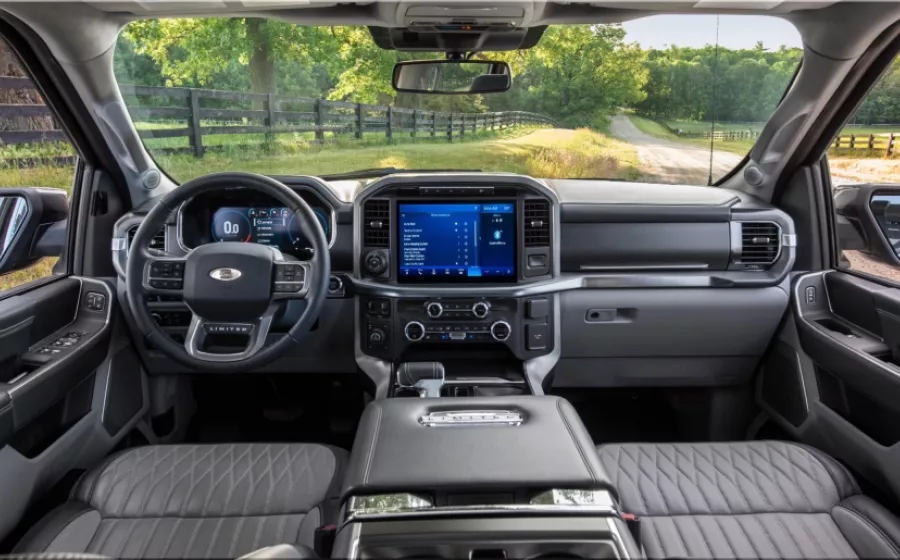
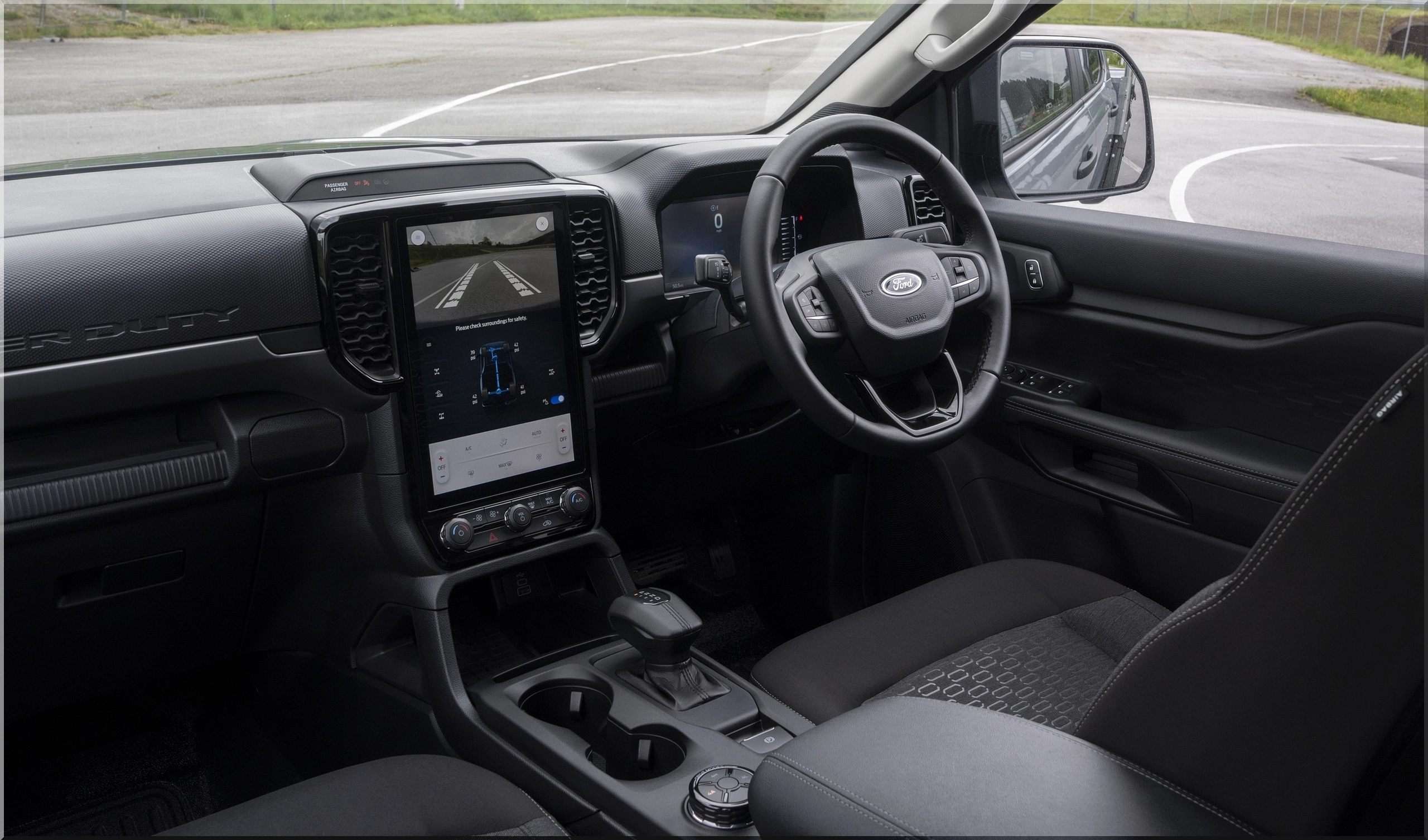
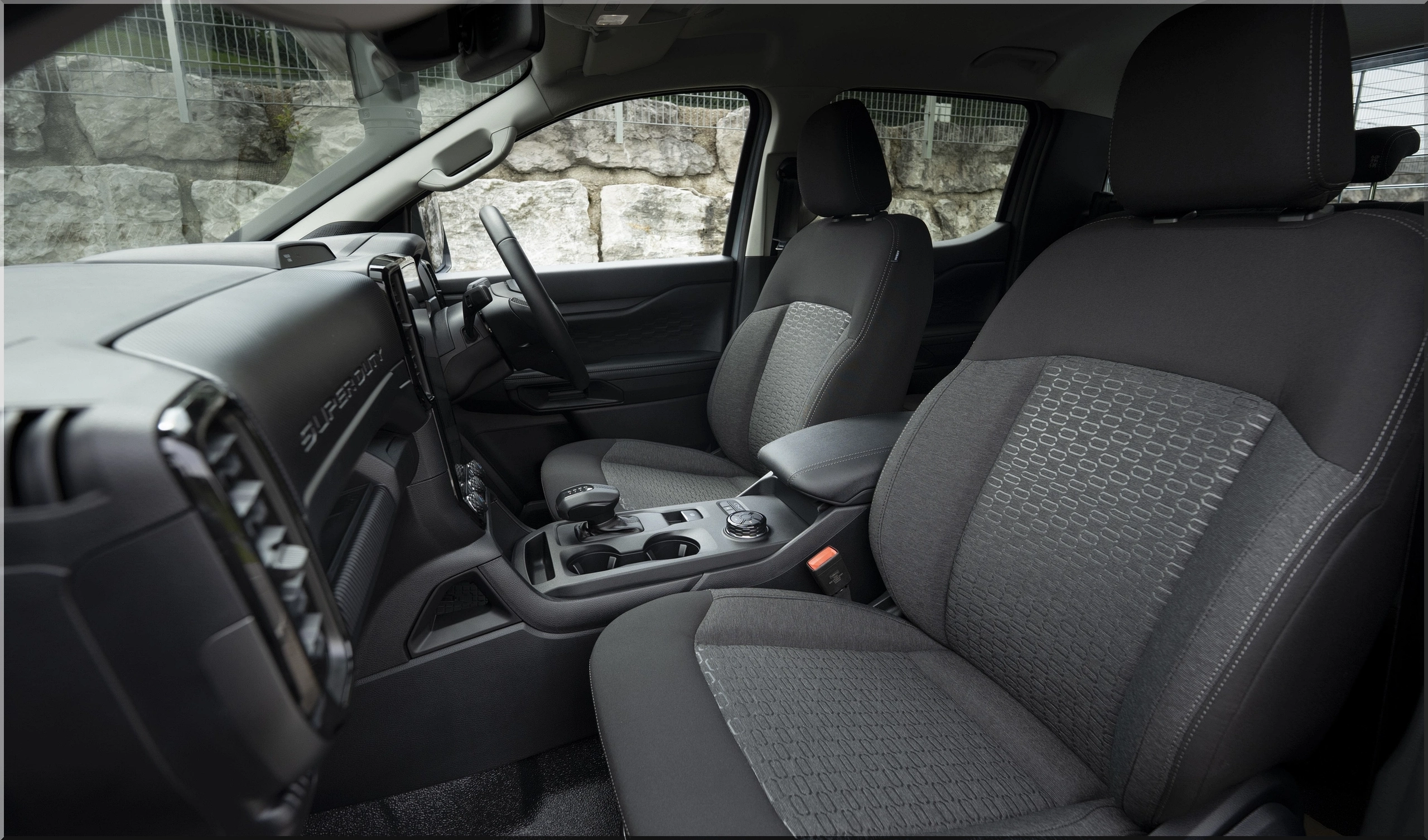
The Super Duty cabin carries the practical Ranger interface: a 12-inch touchscreen, an 8-inch configurable driver display, an embedded modem, navigation, wireless phone integration, and a 360-degree camera system in global specification. Ford also fits six auxiliary switches rated up to 60 amps, giving converters a cleaner path for lights, radios, pumps, compressors, beacons, and specialist gear.
Smart Hitch and Onboard Scales add value for mixed-load fleets. The systems show estimated tow ball load and payload status through the cabin display. Ford says those measurements can carry a tolerance of plus or minus 100 kg in Australia, so operators should still use certified scales for legal loading.
Actionable Question: Who Should Shortlist The Ranger Super Duty?
The right buyer runs heavy equipment, works away from paved roads, and needs a vehicle that can carry and tow on the same mission. The wrong buyer wants lifestyle styling, low running cost, or simple private registration. This truck serves duty cycles, not vanity metrics.
Shortlist the Ford Ranger Super Duty Europe if the job includes:
- Regular towing above 3,500 kg.
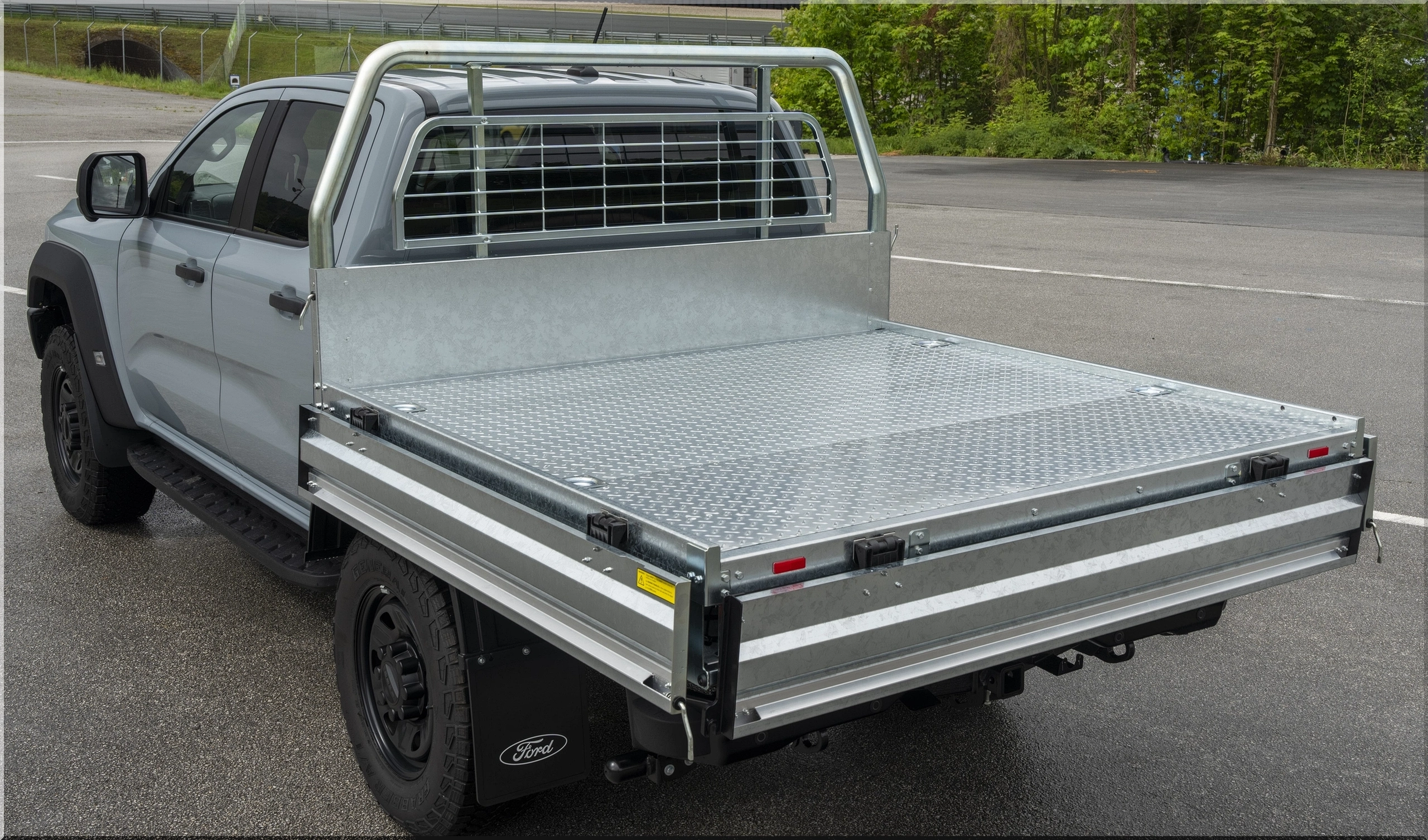
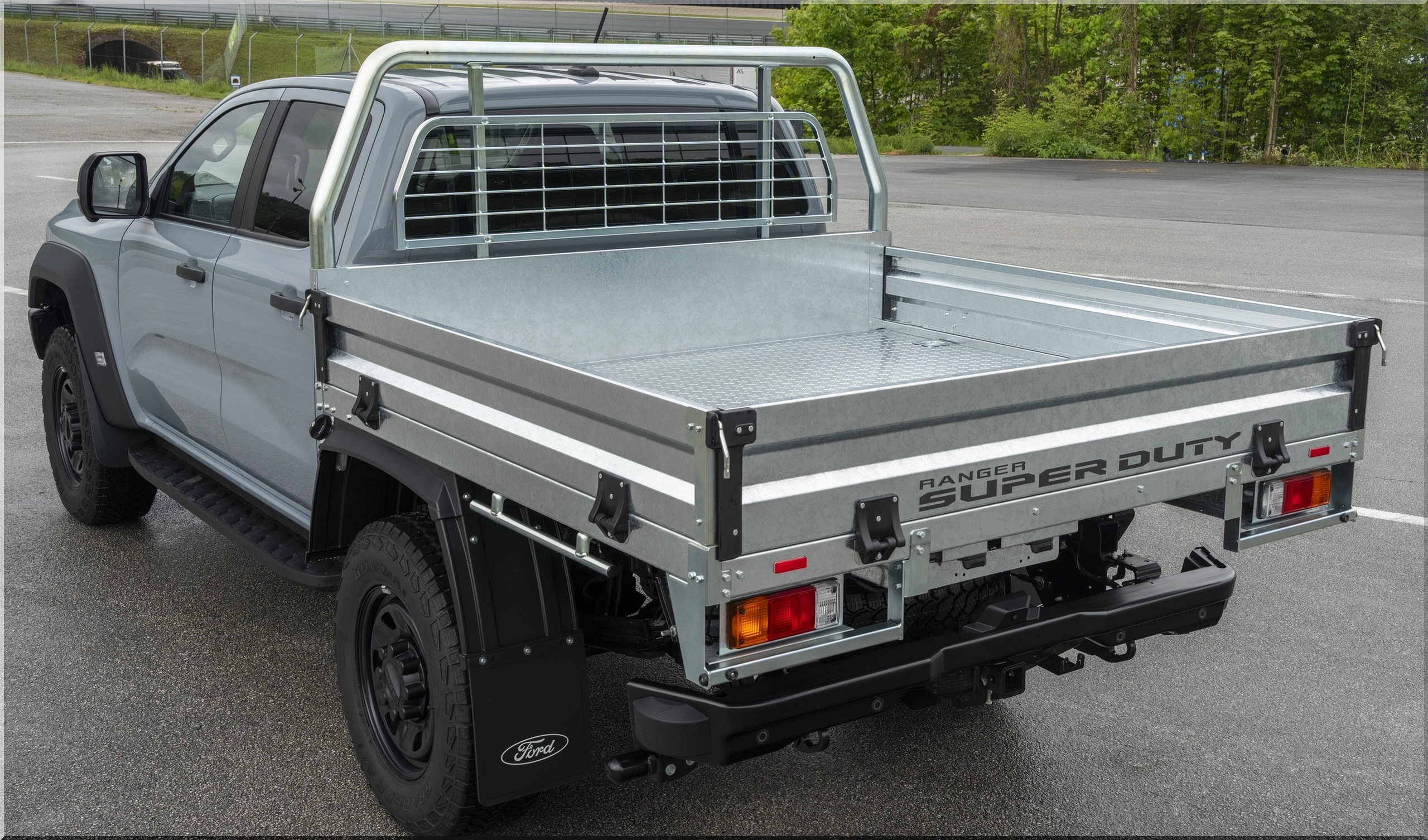
- Heavy bed payload after adding a tray, canopy, tools, or mission equipment.
- Off-road access with water, mud, rocks, sand, or rutted tracks.
- Converter-built bodies for rescue, defense, utilities, forestry, mining, or infrastructure.
- Fleet software, modem access, and Ford Pro support as part of daily operations.
Pro-Tip: Ask the converter for a final mass sheet before purchase approval. Include body weight, accessories, fuel, passengers, tools, spare wheel, communications gear, trailer ball download, and axle loads. A 4,500 kg GVM gives buyers room, but poor upfit planning can burn that room fast.
Pricing, Timing, And European Availability
Ford has opened European ordering through Ford Pro, with first deliveries expected in 2027. Fixed European pricing has not arrived yet because tax treatment, registration status, conversion content, and approval route can change the final customer cost. In this segment, the invoice often reflects the base vehicle plus conversion, testing, certification, and fleet-specific equipment.
Ford has also not published a full European wheelbase-by-bodystyle sheet in the launch material. The Australia model range lists Single Cab Cab-Chassis, Super Cab Cab-Chassis, Double Cab Cab-Chassis, and Double Cab Pickup timing, but European availability may differ by market. Buyers should handle body style, wheelbase data, type approval, and conversion limits as procurement questions, not assumptions.
Ford's Heavy-Duty Ranger Play Makes Commercial Sense
The Ford Ranger Super Duty gives Ford Pro a sharper tool for the European defense market, emergency fleets, industrial users, and converters that need a factory-backed base. It does not chase the broad lifestyle pickup buyer. It chases uptime, mass ratings, controlled upfitting, and off-road access.
Ford took Europe's best-selling pickup nameplate, added load capacity that pushes into specialist truck territory, and kept the package small enough for markets where full-size pickups rarely fit the job. For fleets that need 4.5-tonne towing, near-2-tonne payload, deep-water ability, and converter-ready wiring, the Ranger Super Duty looks like a procurement tool with a grille.
- Add new comment
- 26 views